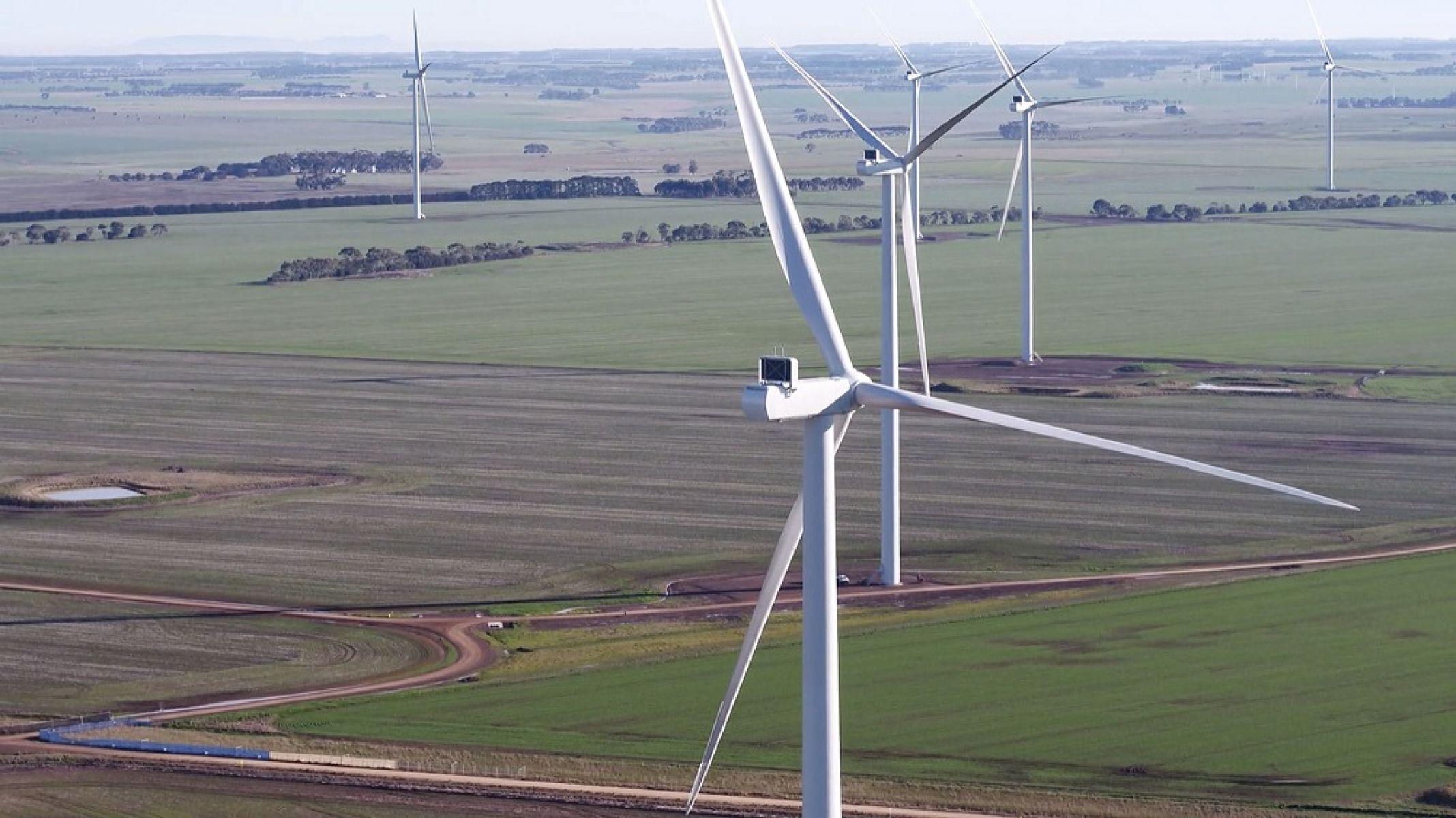
Source: State Government of Victoria
Submission to the Managing the biodiversity impacts of renewable energy - guidance and advisory notes
Submission
29 July 2026

Introduction
The Biodiversity Council welcomes the opportunity to provide feedback on Managing the biodiversity impacts of renewable energy - guidance and advisory notes.
Our understanding
The Department of Energy, Environment and Climate Action (DEECA) developed the Handbook for the development of renewable energy in Victoria (the Handbook) which was released in May 2025. The Biodiversity Council made a submission regarding the Handbook in February 2025.
The guidance and advisory notes include:
- Pre-application guidance for proponents in the renewable energy sector
- Draft Advisory Note 1: Unmapped Brolga flocking areas
- Draft Advisory Note 2: Unknown Bent-wing Bat roosting sites
- Draft Advisory Note 3: Demonstrating the application of a risk-based approach for onshore renewable energy
- Draft Advisory Note 4: Monitoring, reporting and adaptive management
- Draft Advisory Note 5: Developing compensatory measures
- Draft Advisory Note 6: Community engagement and biodiversity values
The Biodiversity Council is primarily concerned with Draft Advisory Note 5.
Draft Advisory Note 5 - Developing compensatory measures
The fundamental parts of Draft Advisory Note 5 are a set of five assessment criteria and a scoring matrix with each criteria scored by level of confidence.
The five criteria are: 1) Scientifically robust, 2) Benefit indicator, 3) Monitoring, reporting and adaptive management, 4) Treatment of risks and/or uncertainties, and 5) Administrative efficiency.
Scores range from 1 (uncertain, high level of difficulty) to 4 (high level of certainty, high level of efficiency). The Advisory Notes states that the “higher the total score for a compensation action, the more likely it is that DEECA will support the proposed compensation action.” Where scores are low, then a proponent may be asked to reconsider or redesign the compensation action, potentially working with DEECA. The approach is problematic.
Our key concerns are listed below. Please see the full submission for more detail.
- The highly discretionary and vague approach is unlikely to result in compensation equivalent to impact
- The compensatory measures are offsetting by another name but with few of the standard guardrails for additionality, security and compliance
- The scoring approach is poorly designed