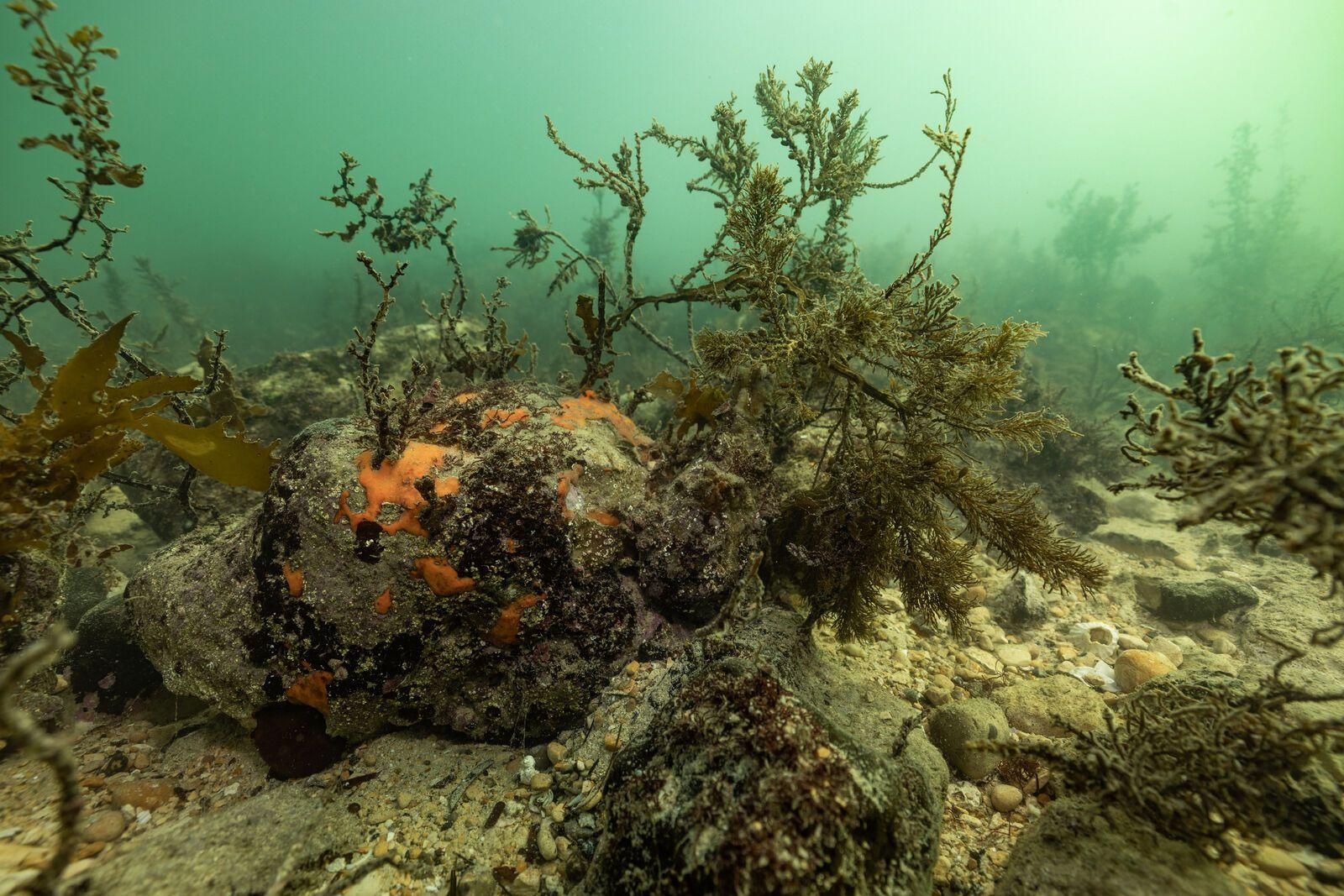
Dead garfish rotting on the seafloor within the algal bloom. Image: Stefan Andrews, UTAS IMAS courtesy Great Southern Reef Foundation.
Submission to the Senate Inquiry into Algal Blooms in South Australia
Submission
1 October 2025
Australia is facing one of the worst marine disasters in living memory: a catastrophic harmful algal bloom (HAB) stretching across more than 4,000 square kilometres of South Australia’s coastal waters,1 devastating marine life and threatening iconic and economically important species and ecosystems. The bloom began in March 2025 on the Fleurieu Peninsula and has since been drawn through Backstairs Passage into the St Vincent Gulf and the lower half of the Spencer Gulf, and has not yet dissipated.
This submission draws on and adds to the Biodiversity Council’s July 2025 report Key actions needed to respond to South Australia’s catastrophic toxic algal bloom, and has been prepared with input from fourteen experts in marine ecology, climate change biology, algal blooms, fish and cephalopod biology, aquatic nutrient cycling, marine social science, marine and coastal ecosystem restoration and mental health from seven Australian universities.
The submission covers the Commonwealth Government's senate inquiry Terms of Reference which includes:
a. Contributing environmental, land management or water quality factors
b. Ecological, economic, cultural and social impacts of algal blooms with particular reference to:
- i. Tourism, commercial and recreational fishing industries
- ii. Regional and coastal communities
- iii. Marine biodiversity and ecosystem health
c. The cultural and economic impacts on Indigenous communities, including any loss of access to traditional fishing
d. The coordination of state and federal government responses, including support, industry engagement and scientific advice
e. The current support and recovery arrangements for impacted industries and communities, including:
- i. Financial support for fishing, aquaculture, tourism and other impacted businesses
- ii. Community resilience and ecosystem services
- iii. Research, monitoring and restoration efforts
f. The adequacy of long-term monitoring, forecasting and prevention strategies, including funding and institutional support for marine science and environmental data collection
g. Any related matters
The submission is also complemented by this statement from the South Australian Aboriginal Land and Sea Management Alliance on The importance of Aboriginal inclusion in responding to South Australia’s Harmful Algal Bloom