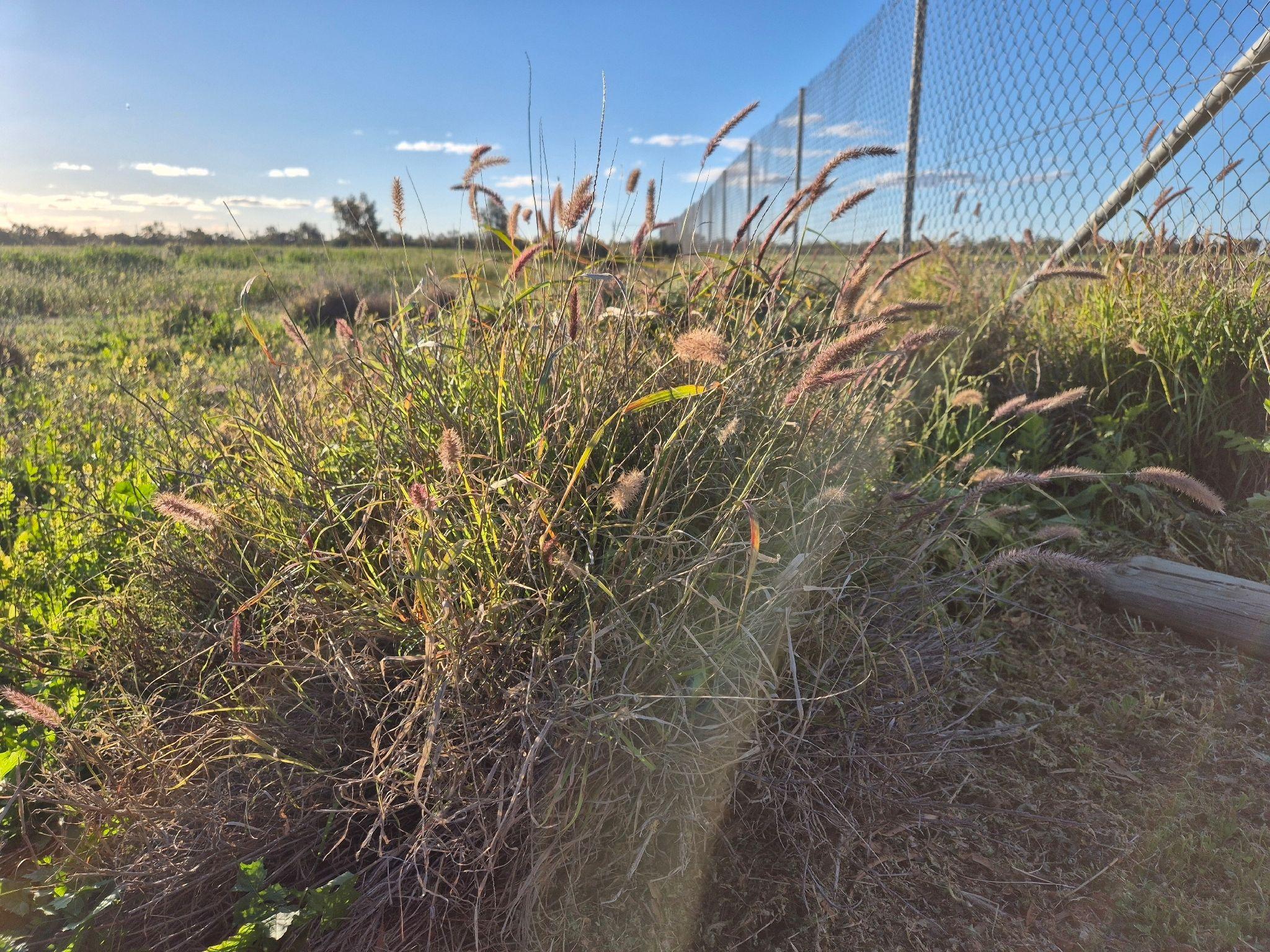
Buffel grass. Photo: Plantbrah/ iNaturalist CC BY-NC
Submission to the South Australian Natural Resources Committee’s Inquiry into Buffel Grass
Submission
9 October 2026
Introduction
The Biodiversity Council welcomes the opportunity to provide feedback on the Natural Resources Committee’s inquiry into the management of buffel grass (Cenchrus ciliaris and C. pennisetiformis) in South Australia.
Background
Buffel grass has been accidentally and intentionally introduced around northern South Australia, with small scale trials at pastoral properties since the 1950s. As a consequence of multiple introductions and hybridisation, buffel grass is genetically highly variable and capable of adapting to new environments. In its native range, buffel grass grows in open bush and grassland of semi-arid areas and so is well-suited to Australian conditions. Once established, the grass will withstand considerable grazing.
The greatest range expansion in South Australia has occurred since the 1980s, and it has now been in the Alinytjara Wilurara, South Australian Arid Lands, Eyre Peninsula, Hills and Fleurieu, Limestone Coast, Murraylands and Riverland, and Northern and Yorke regions
Buffel grass is considered a transformer weed species because of its ability to fundamentally alter environments that it invades. Many ecologists consider it as “the single biggest invasive species threat to biodiversity across the entire Australian arid zone “.
Invasive species are consistently identified as one of the most prevalent threats to Australian ecosystems and buffel grass (Cenchrus ciliaris) is a significant weed species. Buffel grass has the ability to transform Australia’s arid landscapes through altering fire regimes, soil erosion rates and changing vegetation density and character. The impact of buffel grass on biodiversity in arid and semi-arid environments is considered at least equivalent to foxes and cats.
Where invasive, buffel grass forms dense mats or tussocks that displace native grassland communities and reduce their species richness. It is fast-growing and outcompetes native grasses and shrubs. It can occur at high densities that make it it difficult for animals and people to move across the landscape. Buffel grass has led to declines in species richness and changes to species composition.
Our key recommendations: Please see the full submission for more detail
1. Adopt proactive, long-term management strategies: Implement proactive, comprehensive management plans over short-term approaches to maximize long-term protection of biodiversity, cultural sites, infrastructure, and tourism, while lowering net economic costs over time.
2. Provide sustained, ongoing investment: Secure long-term, reliable funding for coordination, surveillance, research, and on-ground management rather than relying on fragmented short-term grants—to ensure multi-year follow-up treatment and retain staff capability.
3. Establish surge capacity: Provide dedicated funding following heavy rainfall events—similar to post-bushfire emergency responses for pest species—so organizations can quickly respond to rapid buffel grass growth.
4. Empower First Nations: Formally recognize the severe social and cultural impacts of buffel grass on Country and ensure First Nations communities are central to decision-making and equipped with sufficient management resources.
5. Advocate for a nationally coordinated approach: Provide support to the nomination of buffel grass as a Weed of National Significance (WONS).
6. Advocate for research into biological controls: Fund research into biocontrol agents and advocate for federal co-investment.