Vale Chris Dickman
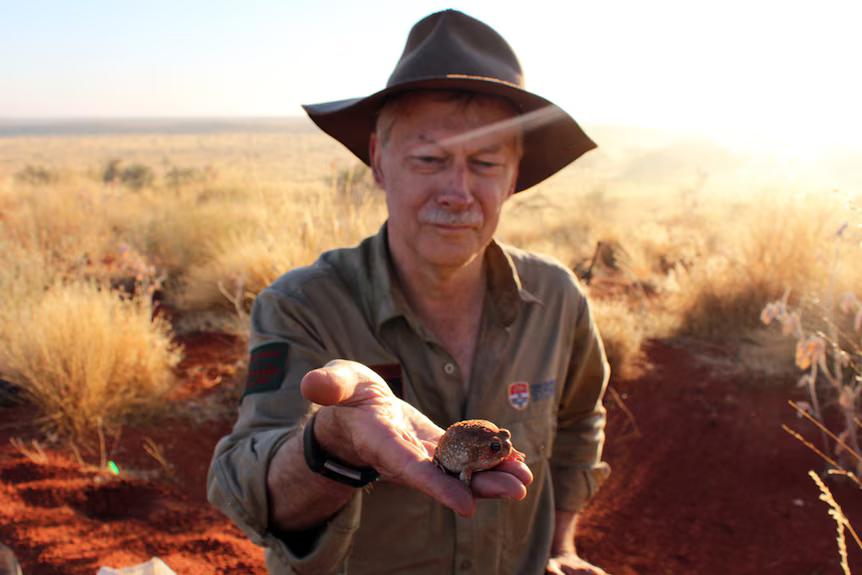
Dr. Chris Dickman working with endangered desert animals, Image Credit: ABC Western Queensland: Harriet Tatham
News story
20 November 2026
On 17th November, we lost a dear friend, mentor and trusted colleague for many, and one of Australia’s foremost ecologists and conservation scientists, Emeritus Professor Chris Dickman. We send our deepest sympathies to Chris’s family, friends and his many colleagues.
Dr. Chris Dickman working with endangered desert animals, Image Credit: ABC Western Queensland: Harriet Tatham
It’s hard to convey just how influential and vital Chris’s work has been to understanding and protecting Australia’s wildlife and ecosystems. Some of his most notable achievements, include:
- Arid-zone ecology. Chris and his research team, affectionally known as the ‘rat catchers’, and collaborators, have studied the rhythms and dynamics of the Simpson Desert for over 30 years. This work spans observational and rigorous experimental approaches to test ecological theory and better understand how the region’s plants and animals survive in such an unpredictable, changing and often hostile landscape. This work fundamentally changed our understanding of how Australia's wildlife responds to the boom-and-bust cycles of desert environments, and the complex interactions between predators, prey, rainfall, and fire that shape these systems.
- Species interactions. Chris’s work on Antechinus, quolls, devils, many other dasyurids, feral cats, foxes, and dingoes, has demonstrated how competition, predation and indirect interactions shape mammal population dynamics and ecological communities, and this has changed how we think about and manage species interactions in threatened species conservation and invasive species management.
- Bushfire impacts. During the 2019–20 fires, Chris and colleagues estimate that more than 1 billion, and later 3 billion, animals had been killed or displaced helped focus the world’s attention on Australia’s wildlife, and the increasing threat posed by mega-fires and their links with a changing climate.
- Threatened species conservation. He brought scientific evidence and clarity to difficult conservation questions — including for many mammal species—challenging assumptions and encouraging us to think more deeply about the causes of biodiversity decline and how best to respond. His work has helped shape not only ecological thinking but also practical approaches to wildlife conservation.
Chris has published muliple books and over 500 scientific papers. But, Chris's legacy is about much more than his publications, discoveries, and scientific influence. He was an extraordinarily generous colleague, mentor, and teacher. He inspired generations of ecologists, encouraged young researchers, and brought enthusiasm, curiosity, and good humour to the scientific community. He had a wonderful ability to make complex ecological ideas accessible, and to remind us why the natural world is worth understanding and protecting. Chris’s lifetime of work and achievements were honoured earlier this year at a festschrift (https://connectsci.au/collection/55146/Chris-Dickman-Festschrift), and it was noted many times by speakers and attendees just how much his support of others has meant to them, and how it has been a major driver for many successful careers.
Chris also served as President of the Australian Mammal Society and of the Royal Zoological Society of NSW, Chair of the NSW Scientific Committee and Chair of the IUCN Australasian Marsupial and Monotreme Specialist Group. His honours include being a Fellow of the Australian Academy of Science, the Clarke Medal and international honorary membership of the American Academy of Arts and Sciences, the Ecological Society of Australia’s Gold Medal, the Australian Mammal Society’s Ellis Troughton Memorial Award and Ronald Strahan Award, Fellow of the Royal Zoological Society of New South Wales, and Fellow of the Zoological Society of India.
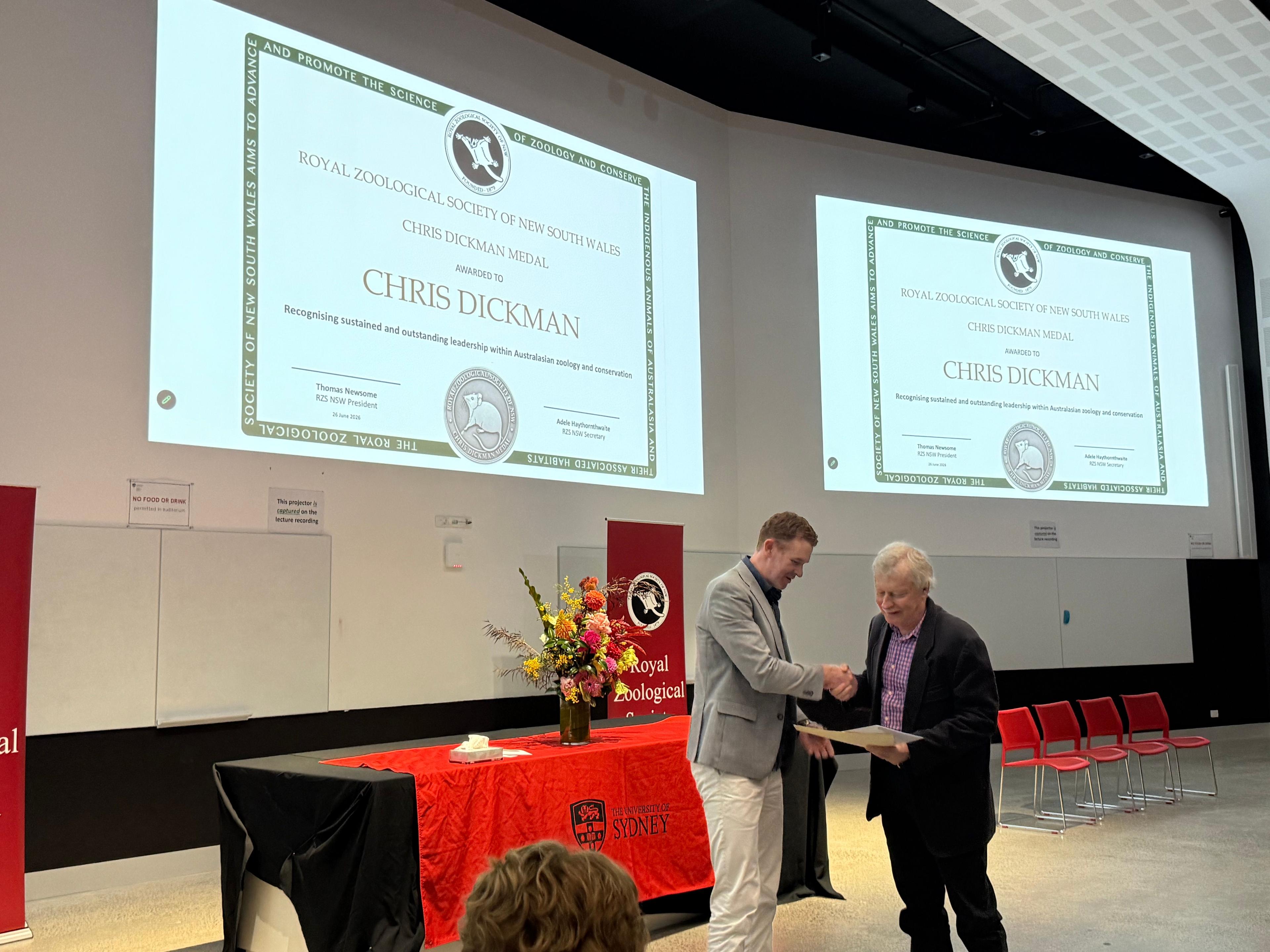
Chris receiving the inaugural Royal Zoological Society of NSW 'Chris Dickman Award', Image Credit: Euan Ritchie
We will remember Chris not just for what he knew, but for his infectious curiosity, his humility, and his unwavering enthusiasm for ecology. He understood that good science requires patience, careful observation, and a willingness to question what we think we know.
Australia has lost one of its great ecologists, and the conservation community has lost a much-loved colleague and friend. His influence will live on through the many people he inspired, the science he leaves behind, and the continuing work to understand, value and protect Australia's remarkable biodiversity.
Vale Chris.
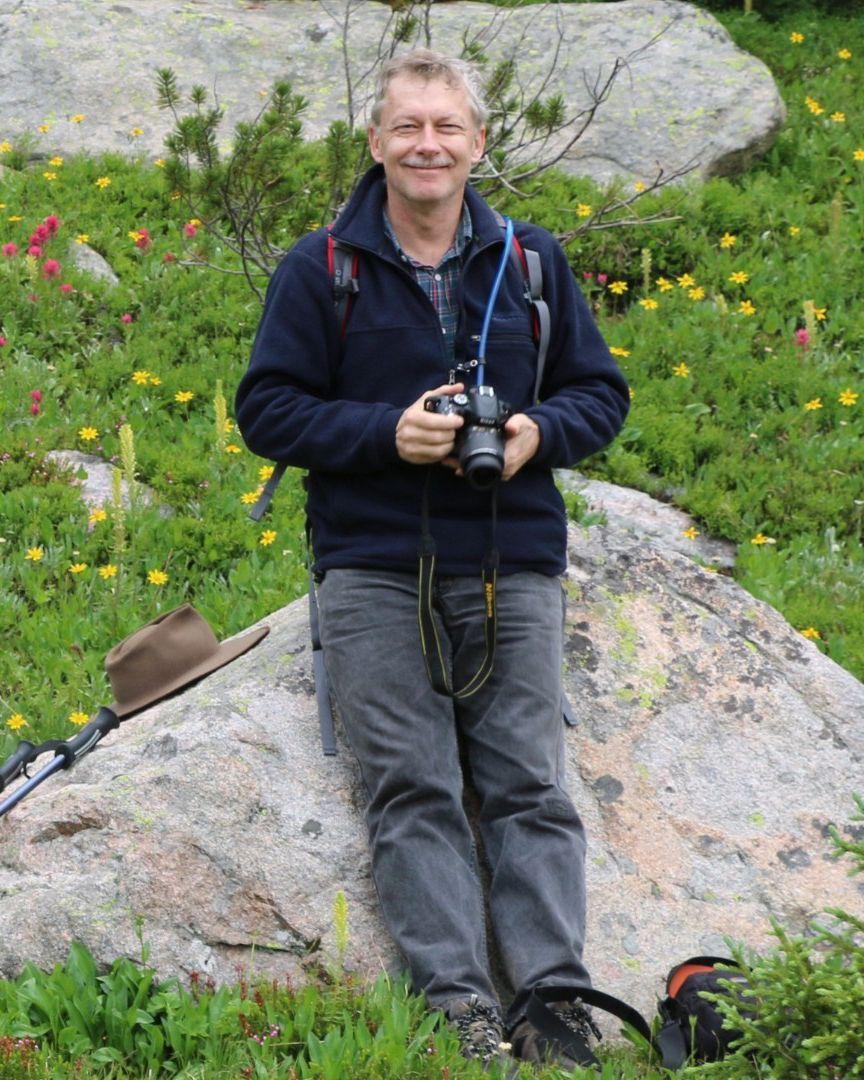
Image Credit: Royal Zoological Society of NSW