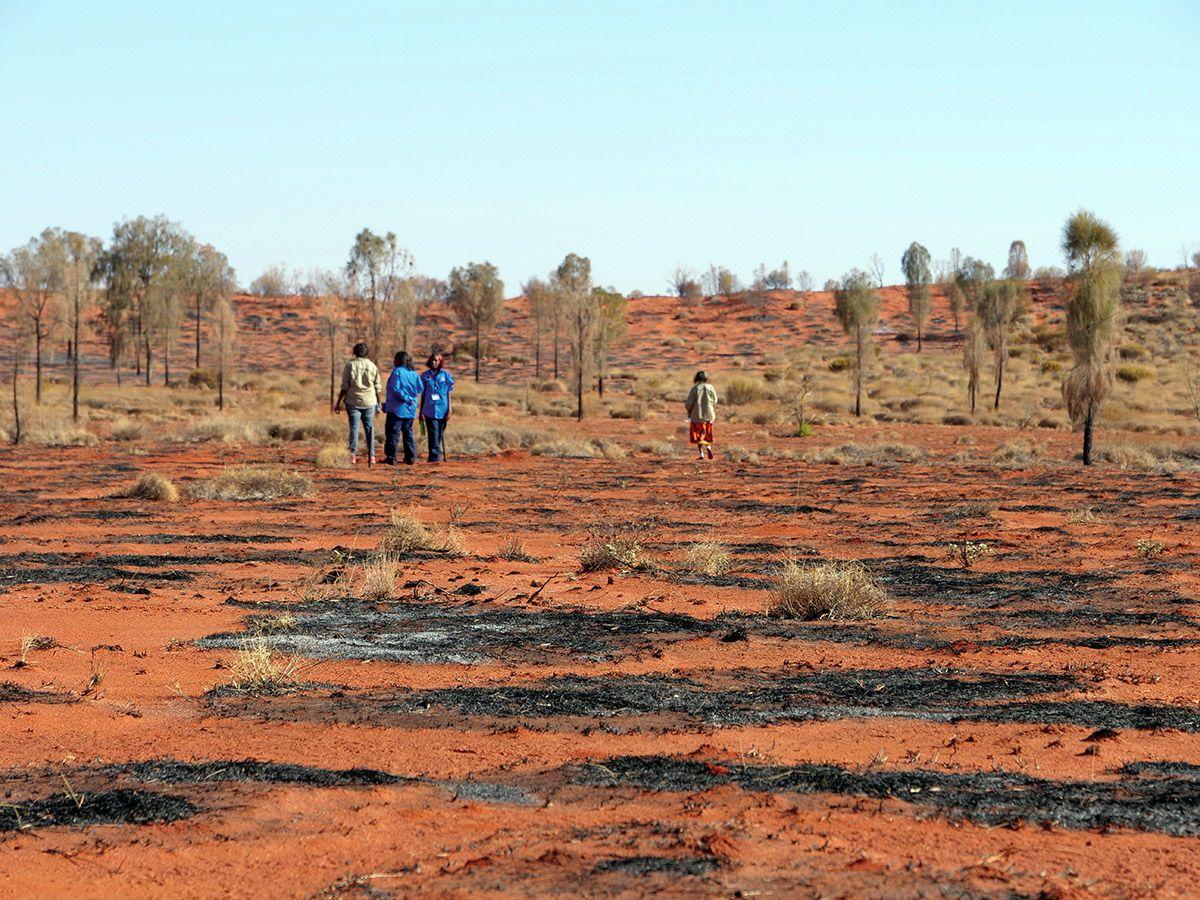
Rangers inspect Tjakura (great desert skink) burrows after a burn on Anangu Country. Image: Jaana Dielenberg
First Nations Knowledge and Scientific Practices
Lessons
24 November 2025
This lesson suits Year 7-8 students within the Science curriculum.
Students will explore how First Nations perspectives influence the development of scientific knowledge by exploring various First Nations land management practices and creating an awareness campaign that communicates their understanding.
Learning intentions:
Students will:
- understand how First Nations land management practices contribute to scientific knowledge and environmental conservation
- explore how the Indigenous Desert Alliance (IDA) integrates cultural knowledge with scientific methods.
Success criteria:
Students can:
- describe at least 1 First Nations land management practice and explain its scientific benefits
- create an awareness campaign that effectively communicates the role of First Nations knowledge in environmental management.
This lesson was created in collaboration with Cool.org as part of the Biodiversity in Action education resources, which are hosted on their website.