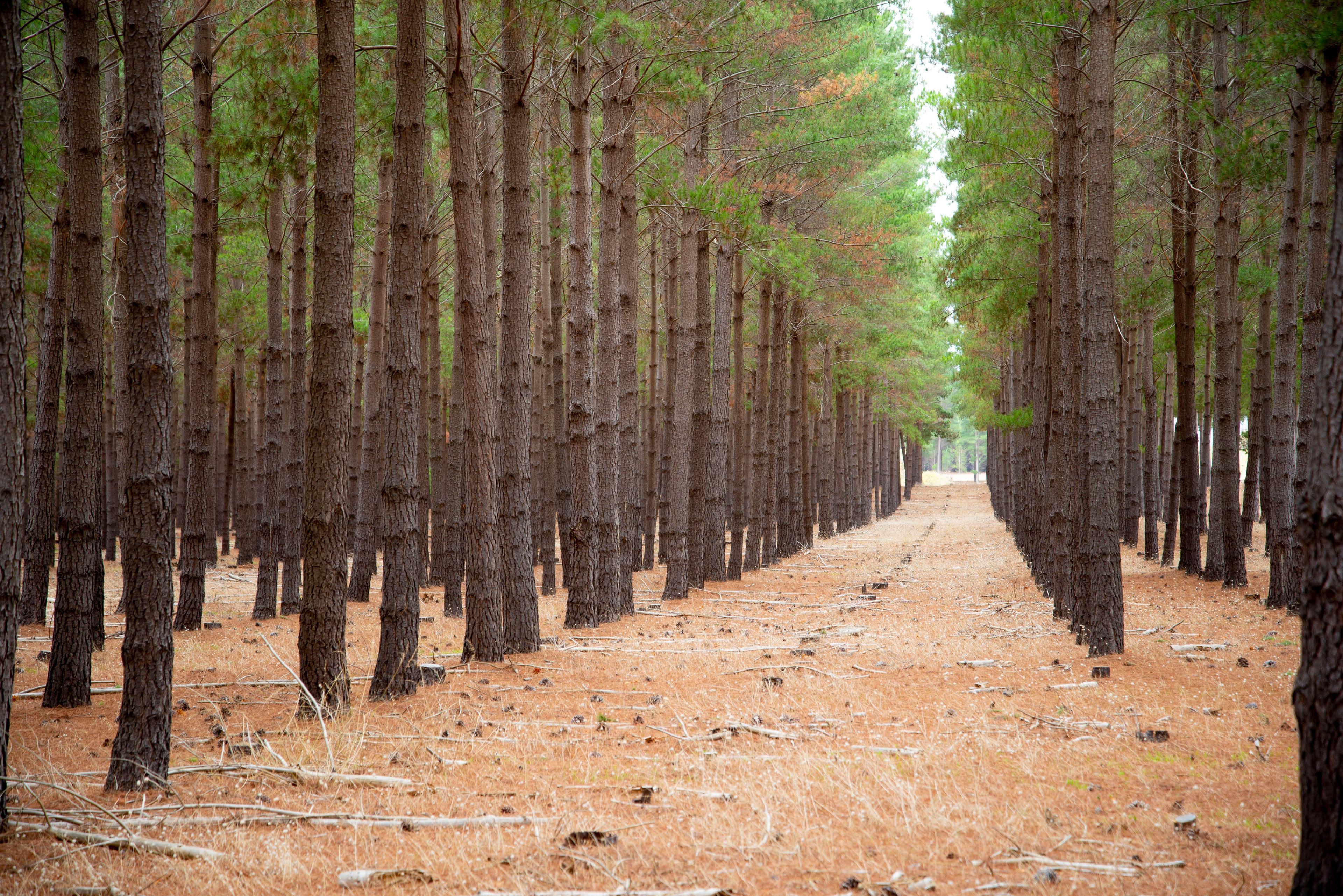
Radiate Pine Plantation, SA. Image: Photon Photos/iStock
Submission to Forest Stewardship Council on Draft Interpretation on FSC-STD-AUS-01-2018
Submission
17 July 2025
The Biodiversity Council welcomes the opportunity to provide feedback on Draft Interpretation on FSC-STD-AUS-01-2018 (the Standard).
The consultation relates to the interpretation of indicators 10.1.1 and 10.1.2 under Principle 10: Implementation of management activities within the standard. The consultation question is whether the indicators allow a harvested plantation composed of native species to be replanted as a plantation with an exotic species. The draft interpretation states that the indicators would not allow a harvested plantation area composed of a native species to be replanted with an exotic species, such as Pinus radiata. The Biodiversity Council strongly agrees with this interpretation. This is non-controversial. 10.1 of the Standard is clear that vegetation cover must be regenerated to ‘pre-harvesting or more natural conditions’. The definitions in the Standard are clear that ‘more natural conditions’ relates to managing sites to restore native species that are typical of the locality. Interpreting this standard to allow replanting with exotic species would fundamentally undermine the FSC’s objective of setting a global benchmark for responsible forestry. Research shows that pine plantations have lower floral and faunal diversity than native forests, so allowing the planting of pines rather than replanting to more natural conditions would have a significant negative impact on biodiversity. Moreover, Pinus radiata is an invasive species in Australia with many recorded instances of it spreading from commercial plantations into surrounding native vegetation. Individual pine wildlings have been found up to 4 km from the parent trees. Research has shown that they impact native vegetation through forming dense canopies and displacing native species, and through the accumulation of pine litter that changes ecosystem function. There are substantial costs associated with removing Pinus radiata wingdings that are often borne by conservation organisations and private landowners.