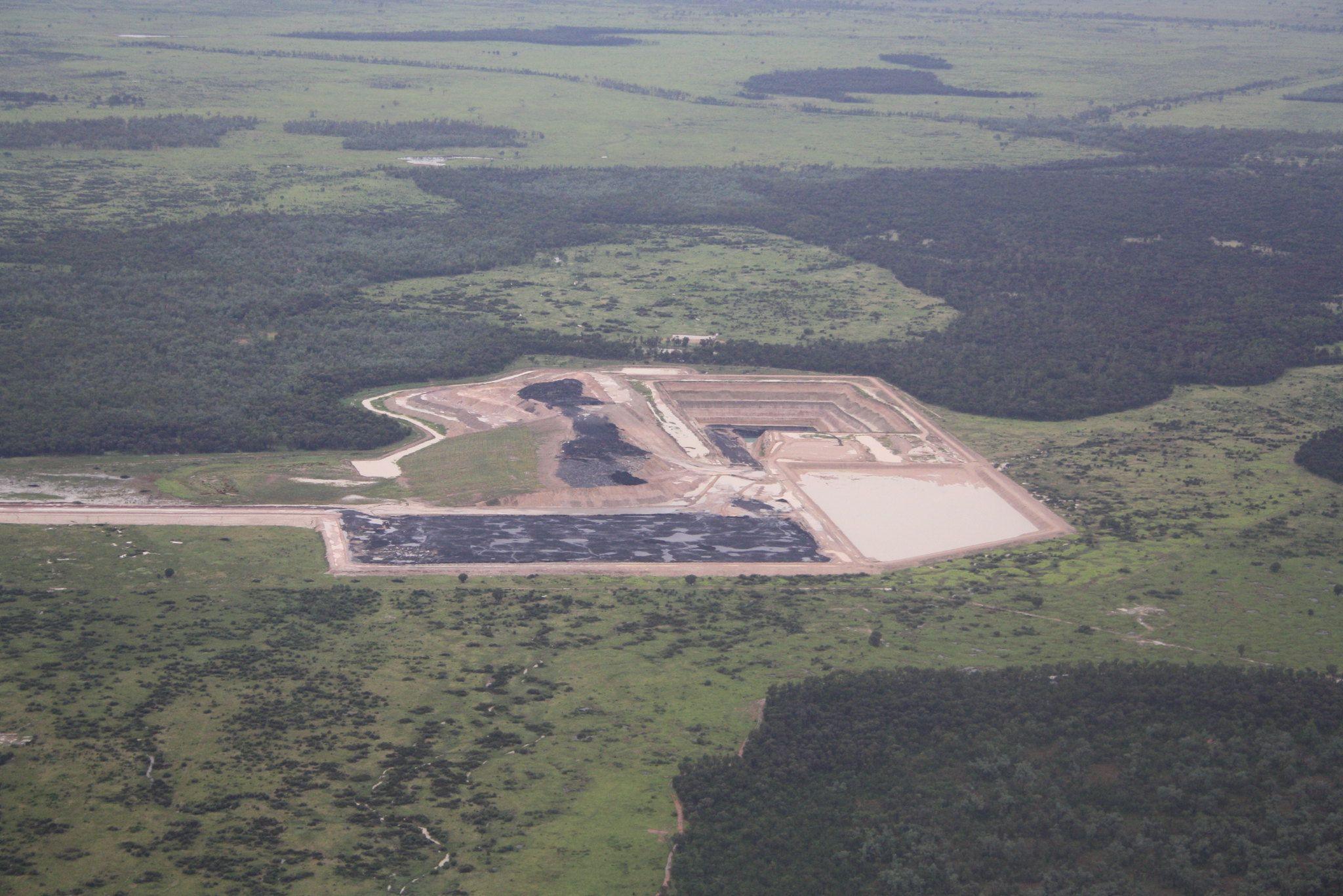
Coal mine in Queensland. Image: The Greens / CC BY-NC-ND 2.0 Flickr
Submission to the National Environmental Standard for Environmental Offsets
Submission
30 January 2026
Introduction
The Biodiversity Council welcomes the opportunity to provide feedback on the draft National Environmental Standard for Environmental Offsets.
Our understanding
The consultation includes a policy paper and legislative instrument. The legislative instrument formalises the standard as law under the Environment Protection and Biodiversity Conservation Act 1999 (EPBC Act). The policy paper explains how the standard is intended to work.
While the offset principles in the policy paper are sound and the non-regression principle is welcomed, key issues with wording of the legislative instrument and the flexibility of the Restoration Contributions Holder fundamentally undermine the standard. In places, the significant mismatch between the policy paper and the legislative instrument could be considered highly misleading for those who cannot interpret statutory documents.
Key concerns are listed below. Download the submission for a more detailed explanation:
- The standard does not define the required outcome for an offset
- The outcomes are problematic
- The legislative instrument uses non-binding language
- ‘Principle 1 - Feasibility’ is weak
- ‘Principle 2 - Security’ should ensure outcomes are maintained
- ‘Principle 3 - Direct and tangible’ is poorly designed
- ‘Principle 5- Additionality’ must be tightened
- There are two missing Principles critical to the successful application of the Standard
- The Restoration Contributions Holder is not bound by the offset rules in the Standard and can deliver offsets that are not ‘Like-for-Like’
How to strengthen the standard
The most critical amendments to the legislative instrument are:
Overall
- Use strong binding language.
Definitions
- Include the definitions of ‘net gain’ and ‘baseline’ from the policy paper as follows:
Net gain: the measurable improvement for the affected protected matter relative to an agreed baseline.
Baseline: An evidence-based estimate of the likely condition of a protected matter at the point of approval and in the absence of the action or offset being proposed [static baseline from approval date].
Object
- Amend the object as follows:
The object of this Standard is to provide a framework in which offsets (where permitted) at least fully compensate for residual significant impacts to deliver a net gain and contribute positively to the protection and enhancement of protected matters.
Outcomes
- Amend Outcome (b) as follows:
Each offset results in a measurable improvement from the baseline at the time the relevant decision is made under the Act for affected protected matters in net terms across the impact and offset sites.
Principles
- Include additional principles pertaining to (i) Transparency and accountability, and (ii) Offsettable and non-offsettable matter, according to the wording we provide at attachment 1.
Restoration Contributions Holder
- The Holder should be bound by the standard the same as any other delivery pathway. Then, if it turns out they take a payment that they find is inadequate to deliver on the requirements, no further payment pathway routes can be used for that matter until the reason for the problem is resolved (if it can be). A stricter approach would be to develop a set of advanced offsets or at minimum identify the specific MNES and circumstances where offsets are highly likely to be able to be sourced and for a reliably estimated cost, and ONLY accept the payment pathway for those.
There are numerous places where the language of the legislative instrument could be strengthened to reduce ambiguity and ensure alignment with the intended outcome. Please download the full submission to see Appendix 1 for some suggested changes.
The Biodiversity Council would be happy to work with DCCEEW on detailed revisions.