Become a scientist in your own backyard – all you need is a (phone)camera and iNaturalist
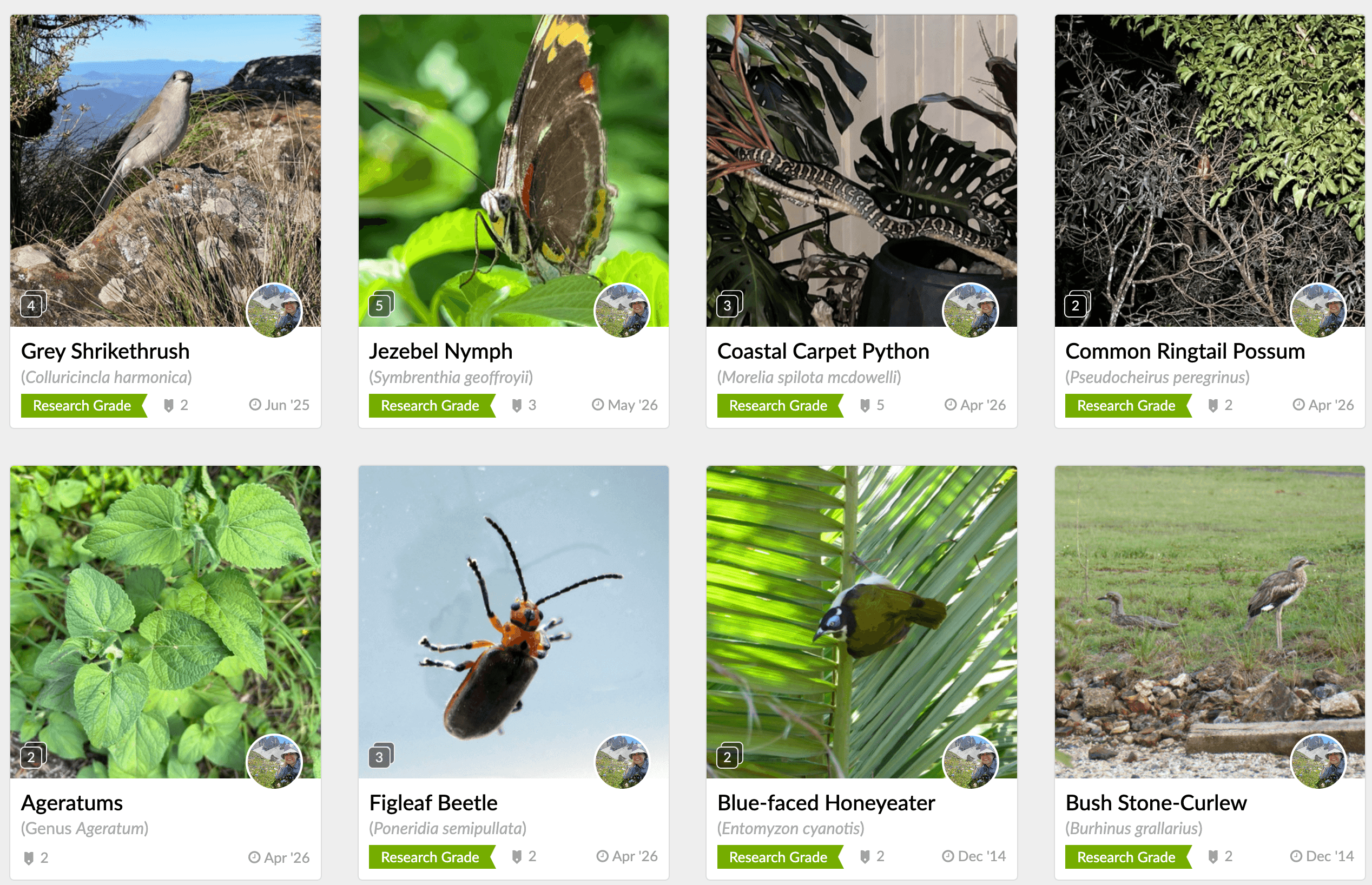
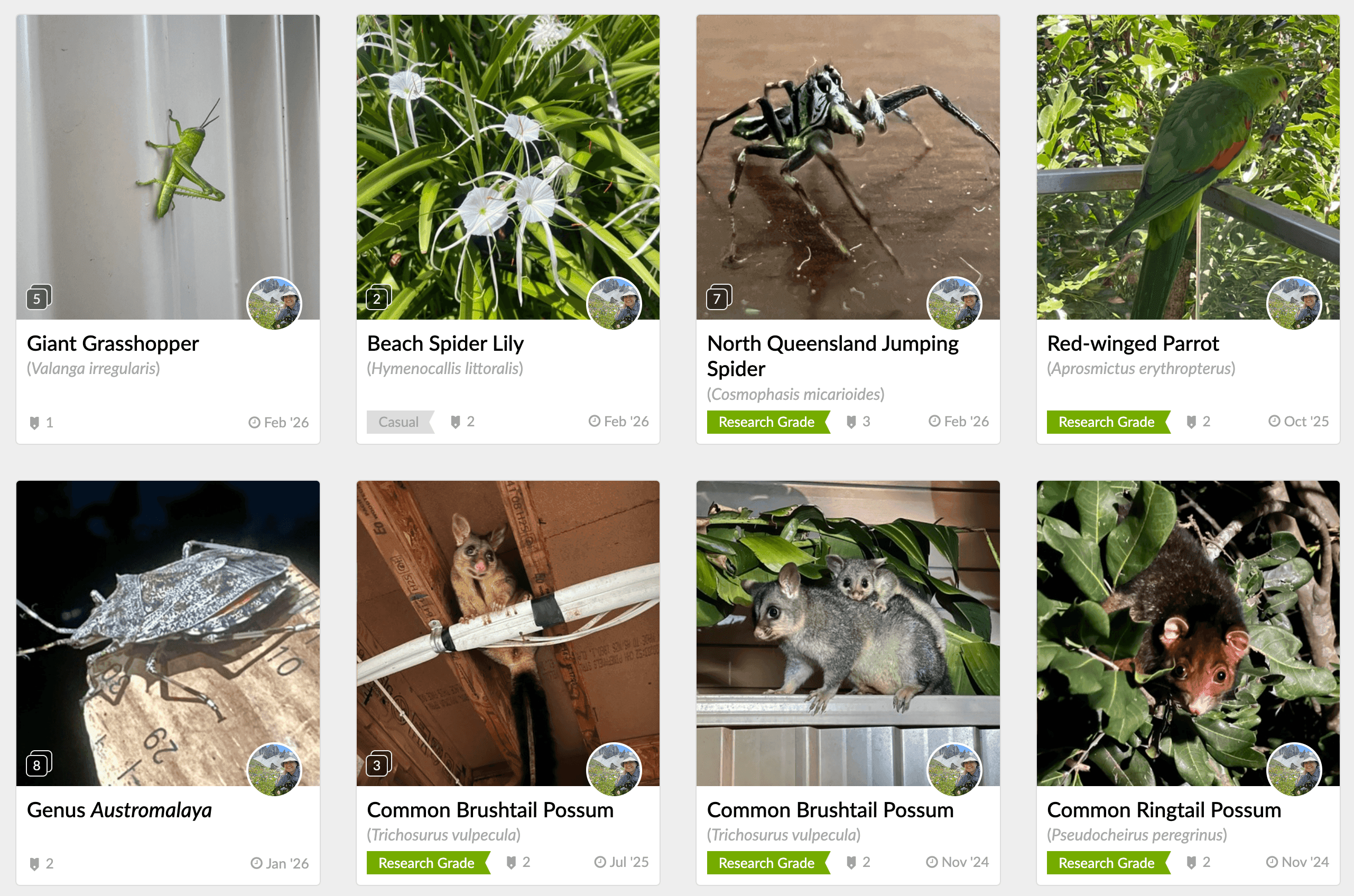
What if that strange beetle on your back fence, tiny mushroom in your local park or unfamiliar bird visiting your garden could help scientists better understand Australia’s biodiversity?
Darwin-based nature enthusiasts Nick Volpe and Lucyna Kania are among a rapidly growing community of people finding out just how much there is to discover when you start looking.
They are enthusiastic users of iNaturalist – a free app that lets anyone photograph and record the wild plants, animals and fungi they encounter and contribute their observations to science.
Together they have made almost 2,500 observations of more than 1,500 species! And sometimes, those observations can lead to remarkable discoveries. Nick and Lucyna’s wildlife explorations led them to discover a spectacular parasitic ‘ghost wasp’ at Leliyn (Edith Falls) that was new to science.
Watch Nick and Lucyna explain why they love iNaturalist – and how easy it is to get started. LINK COMING SOON
Turn your nature sightings into science
The idea behind iNaturalist is beautifully simple. Photograph a wild plant, animal or fungus and upload what you saw. The app can suggest an identification, while a global community of naturalists and experts can help identify it.
You don’t need to know what you’ve found. You just need to notice it.
And once you start looking, you may be surprised by just how much life is around you.
iNaturalist has now amassed more than 300 million verifiable observations from around the world, creating an extraordinary source of information about where species occur and how their distributions are changing.
These observations can help scientists map species distributions, track invasive species, document responses to fires and other environmental changes, and monitor species across areas far larger than researchers could ever survey themselves.
Australian iNaturalist observations are also shared with the Atlas of Living Australia, helping build our national picture of biodiversity.
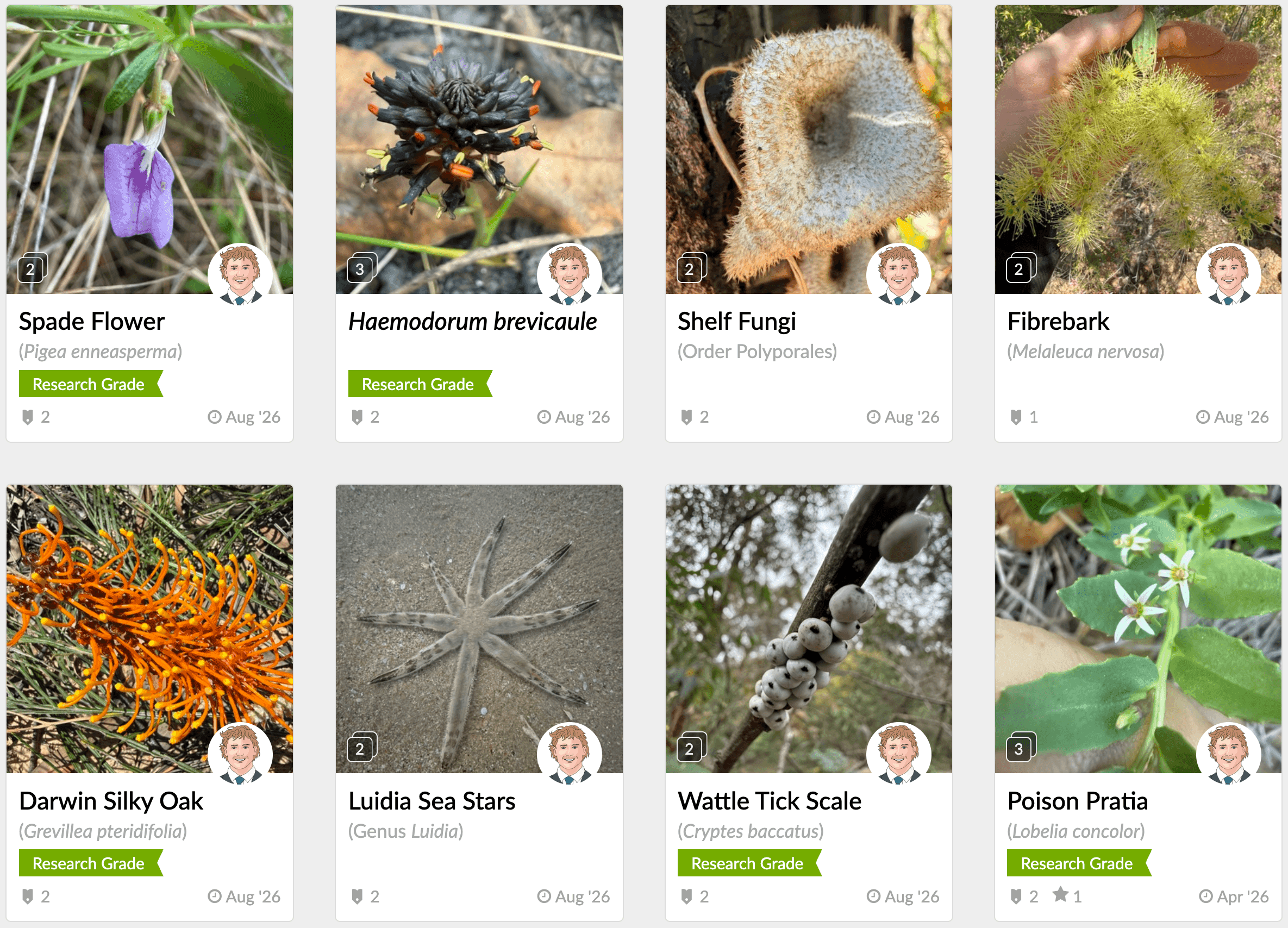
Ready to start spotting?
You don’t need to travel to a national park or remote wilderness. Start with your backyard, balcony, local creek or neighbourhood park.
Take clear photos – preferably from a few angles – upload them with the date and location, and see what the iNaturalist community makes of your find.
Get started with iNaturalist or check out iNaturalist’s tips for making great observations.
And if you develop a particular obsession, there are plenty of ways to specialise. Record frog calls with FrogID, hunt for Christmas beetles, track migrating Bogong moths or contribute bird observations through eBird.
So grab your phone, head outside and start looking. You never know what might be living right under your nose.
Article by Clancy Lester (1,424 iNaturalist observations of 735 species) and Jaana Dielenberg (893 observations of 525 species), but who is competing!