Australia’s policy choice: should government investment help or harm nature?
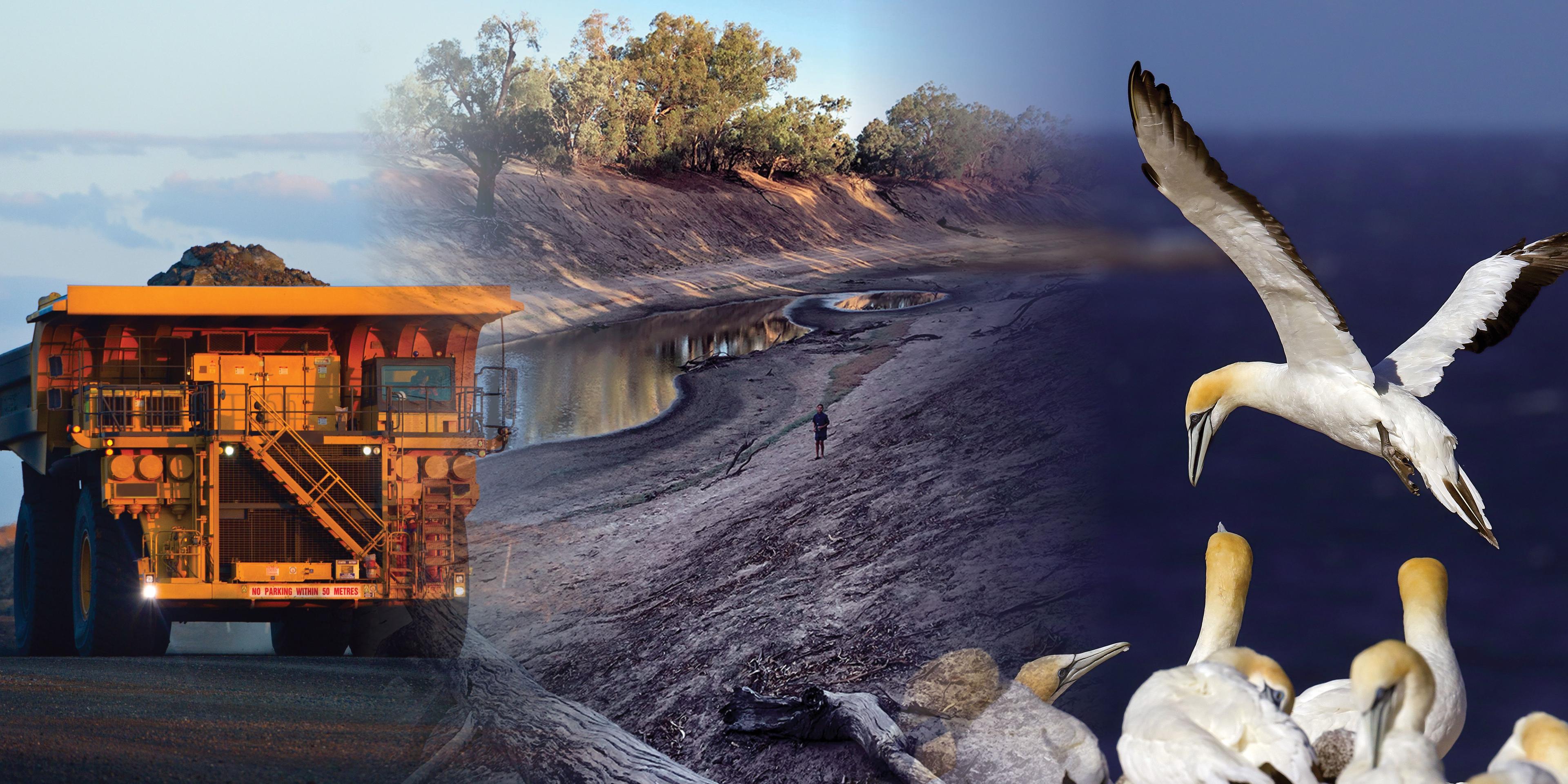
Where does Australian Government money flow? Photos: Truck by Churig/iStock; Dry Darling River by Jaana Dielenberg; Australasian gannet colony in Victoria by Patrick Kavanagh CC BY 2.0 DEED flickr
The Australian Government spends almost as much subsidising nature-damaging activities as is needed to meet all of Australia's international biodiversity conservation commitments, according to a new Biodiversity Council report.
The report, A fiscal choice: funding nature in Australia, brings together two recent peer-reviewed studies showing:
- Meeting Australia's 23 commitments under the United Nations Global Biodiversity Framework would cost $29.3 billion annually – more than 25 times current Australian Government spending on nature protection and recovery.
- Australian Government subsidies supporting activities that harm nature totalled $26.3 billion in 2022–23, including $14.1 billion supporting fossil fuels.
Research lead author Paul Elton at the Australian National University said the findings showed that adequately funding nature conservation was a question of government priorities, not capacity.
“This is the first time we have had an estimate of how much money is needed to meet all of our commitments under the UN biodiversity convention, including protecting 30% of land and seas, restoring degraded ecosystems, tackling invasive species and preventing extinctions.
"Most of the funding would go to meaningful jobs in regional and remote areas to protect and manage natural areas, restore degraded ecosystems, prevent extinctions and control invasive species.
"Reforming nature-harming subsidies could both reduce environmental damage and free up money for conservation.
"For example, $2.2 billion in subsidies to farming, fishing and forestry could be redirected towards conservation delivered by farmers and other land managers."
Biodiversity Council member Professor Brendan Wintle from the University of Melbourne said care of the environment is an important government responsibility.
"For more than 20 years, governments have looked to private investment to help fund nature conservation, but it has largely failed to deliver at the scale required.
“Private investment can play a supporting role, but it cannot replace substantial public funding,” Wintle said.
“Most conservation activities don't generate a financial return, but they deliver enormous benefits to society through clean water, healthy soils, pollination, improved human health, climate resilience and rewarding jobs.
"The Australian Government has committed to halting and reversing biodiversity loss, and should back those commitments with a properly funded national biodiversity plan and a timetable for reforming harmful subsidies."
The report comes as the United Nations Convention on Biological Diversity conference (COP17) wraps up in Yerevan, Armenia. (19–30 October). It has focused on global progress in halting and reversing biodiversity loss.
The Biodiversity Council is an independent expert group founded by 11 Australian universities.