Biodiversity Council welcomes WA pet cat containment reforms and benefits for wildlife and cats that will flow

A roaming cat. Image Agape/Unsplash
The Biodiversity Council welcomes the passage of amendments to Western Australia’s Cat Act, empowering local governments to make and enforce cat containment laws.
The council commends the Cook Labor Government for delivering these reforms, which will enable local governments to require pet cat owners to prevent their cats from roaming and hunting beyond their own properties.
The reforms bring Western Australia into line with most other Australian states, where local governments can establish cat containment laws in response to overwhelming scientific evidence of the impacts of roaming pet cats on native wildlife, improved health and welfare for pet cats and strong community support for containment.
Biodiversity Council member and cat impact and management expert Professor Sarah Legge said roaming pet cats collectively take an enormous toll on Australian wildlife.
“There are over 600,000 pet cats in WA and more than 400,000 in Greater Perth alone,” Prof Legge said.
“Based on research that has fitted video collars to cats, sampled their poo, and surveyed their owners, each one of those pets that is permitted to roam kills on average 110 native animals per year. So the numbers and impact really stack up.
Because pet cats live at high densities in residential areas, their collective predation tolls on wildlife per square kilometre can far exceed that of feral cats in the bush, stripping wildlife from our neighbourhoods.”
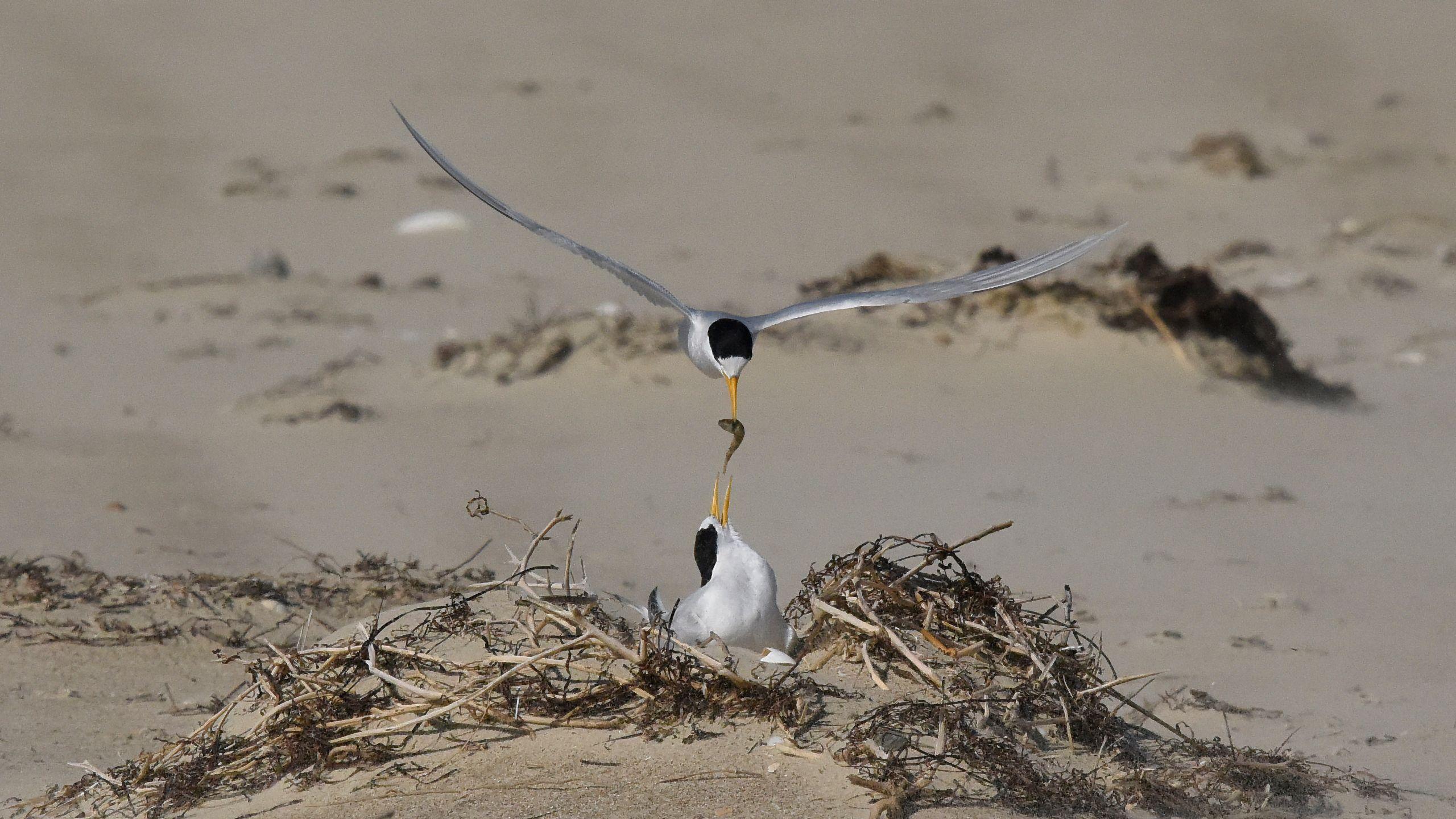
Fairy terns nest on the beach and are one of the many native species that will benefit in council areas where pet cats are no longer permitted to roam. Image courtesey Eric J Woehler
The reforms would benefit wildlife, pet cats and the wider community, said Dr Heather Crawford who is a Director on the Board of the Cat Haven, WA’s largest animal charity, and an applied animal behaviourist and cat welfare expert.
“People invest considerable time and money creating wildlife-friendly gardens, and understandably become upset when roaming cats kill native birds, reptiles and other wildlife in their gardens.
“Keeping pet cats contained is also better for their health, safety and longevity, reducing their exposure to road accidents, fights, injuries and disease.
“These reforms will enable local governments to better respond to community expectations and protect local wildlife.”
Behavioural science researcher Dr Meg Shaw from Monash University’s BehaviourWorks Australia said social research demonstrated strong community support for cat containment.
“A national survey of around 4,000 Australians conducted by BehaviourWorks Australia for the Biodiversity Council found that 69% of people nationally and 71% of people in WA supported requiring cat owners to keep their cats contained to their properties, while only 7% opposed it nationally or in WA, with the remainder neutral.
“Only 7% of respondents nationally and 3% in WA indicated they would personally be unwilling to keep a pet cat contained to their property, with the vast majority already doing so regularly or willing to do so.
“These findings demonstrate that cat containment is widely supported and acceptable to the Australian community.”
The Biodiversity Council encourages Western Australian local governments to use their new powers to introduce effective, around-the-clock cat containment laws, supported by community education and guidance to help owners transition their cats to contained living.
Prof Peter Klinken AC, Chair of the WA Feral Cat Working Group, said, “Today we have seen the start of a new era in what it means to be a cat owner in Western Australia, where cat containment is a core responsibility.
“When done well, cat containment is better for everyone – pets, people, and wildlife.”