Robodebt for the environment - Rushing AI into EPBC Act assessments could repeat past policy failures
Source: Kelly / Pexels
Media Release
7 April 2026
The Minerals Council of Australia has called on the Australian Government to invest $13 million to embed AI tools into federal environmental approval processes under the Environmental Protection and Biodiversity Conservation Act (EPBC) 1999, to speed up mining project approvals.
The Biodiversity Council believes that AI could play a role in supporting simple tasks, but assessment decisions under the Act cannot be automated because the laws are too vague, there is too little suitable data available, and the assessments are too complex and variable.
The university-led expert group warns that attempting AI automation of project assessments under the EPBC Act could lead to a "Robodebt" style failure, where computers make flawed decisions without transparency, they are rubber-stamped without scrutiny, and the result could be endangered species driven closer to extinction.
Biodiversity Council Policy and Innovation Lead Lis Ashby said vague rules and discretion are a problem.
"Australia’s Environment Protection and Biodiversity Conservation Act is full of vague language and broad ministerial discretion, as are the accompanying draft National Environmental Standards.
"The vague rules add to the current length of assessment processes, because they impede rules-based decision-making by human assessors. The lack of clear rules will be even more problematic for an AI tool.
"Setting clear rules in the National Environmental Standards, including defining what is unacceptable, would speed up assessment times, even without AI help, and is important for any future adoption of AI."
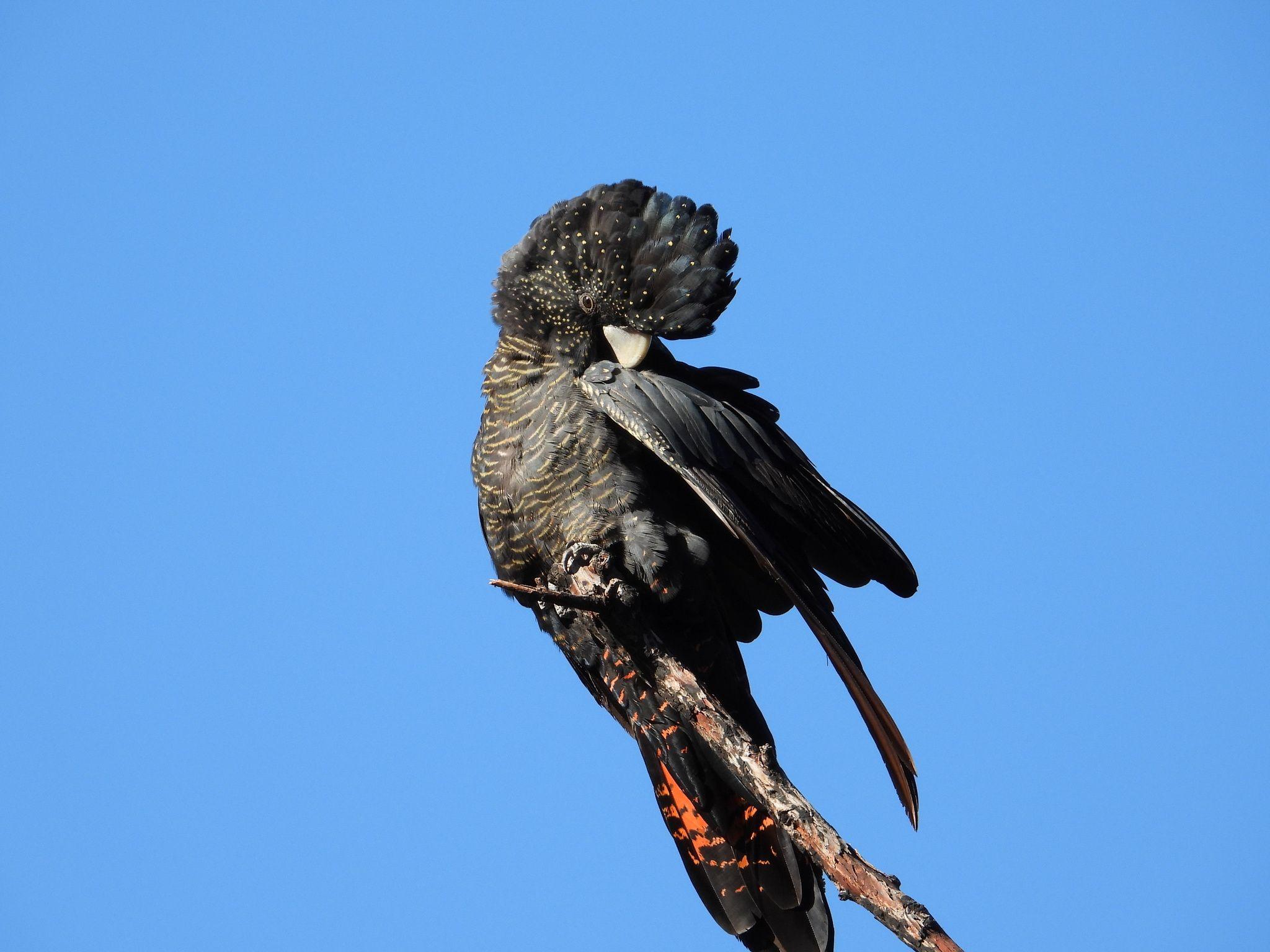
Many species, like the forest red tailed black cockatoo, are threatened by habitat loss from activities like mining. Source: Tommy Osborne / iNaturalist CC BY-NC
Biodiversity Council member Professor David Lindenmayer from the Australian National University said data was a limitation.
"AI decisions are only as good as the data they rely on, and good data is not publicly available for most of Australia’s threatened species - often not even basic location data.
"AI automation risks decisions based on flawed or outdated information, failing to protect biodiversity.
"Our research found that a third of Australia’s threatened species had never been monitored, while most others have poor, patchy data. This lack of data would make AI assessments very unreliable.
"Human assessors overcome the data gaps by consulting experts to access what is in their heads and their unpublished data. They also know to question if older data sets may no longer be reliable, e.g. due to a fire.
"How on earth will AI consult with Elders about important cultural sites? Without those important conversations, we are at great risk of more cultural harm from the mining industry."
Biodiversity Council member Professor Hugh Possingham from the University of Queensland said AI can support routine tasks, but not yet replace human expertise in complex environmental assessments.
"AI could be used to speed up the production of first drafts of assessments, based on standard material.
"However, it is essential that a skilled, trained officer, familiar with the Act, thoroughly reviews any AI draft and ultimately makes the scientific assessment.
"Skilled human assessors will remain essential - only humans with the knowledge and experience to complete assessments themselves can critically review AI outputs and recognise when they must be challenged.
"Another concern is that AI tools generally need material to be trained against. The past 20 years of EPBC Act approvals are clearly unsuitable material as the Act has demonstrably failed to protect the environment.
"The best way for the Government to speed up assessment processes would be to set more explicit rules and then employ more people to undertake assessments - that’s what I would spend the $13 million on if that was my aim.”