Feral cats bounties are being trialled in parts of Queensland - do they work?
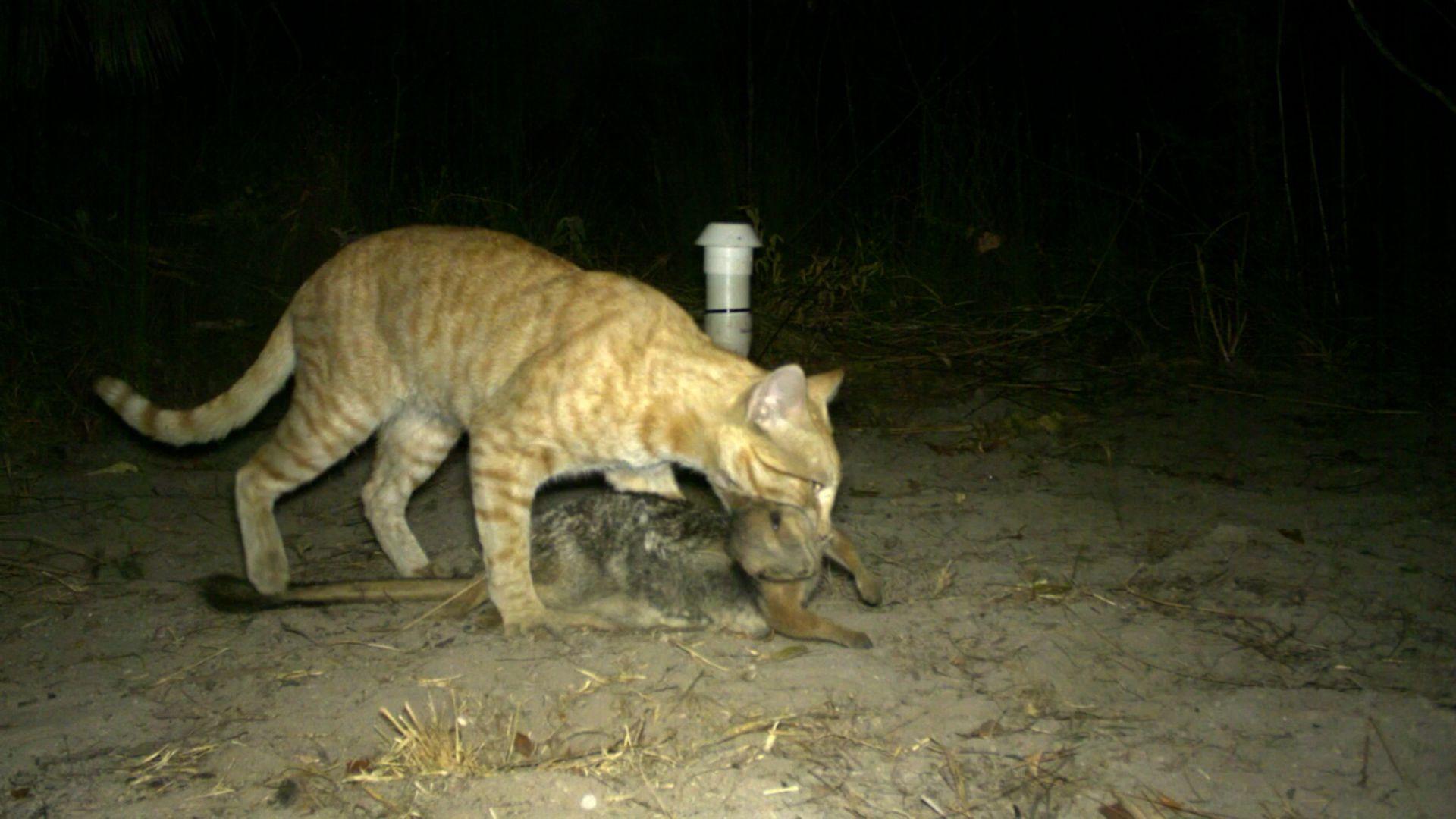
A feral cat killing a wallaby. Source: Northern Territory Government
Feral cat numbers are booming in central and western Queensland following some wetter seasons.
Research based on results from nearly 100 studies across the country has found that each of those feral cats is likely to be killing over one thousand animals per year, including native frogs, birds, reptiles, mammals and insects.
Out of concern for native wildlife, local councils are looking for solutions, with several, including Mt Isa, currently trialling a feral cat bounty. It is great that councils, recreational shooters and landowners recognise the impact cats have on wildlife and want to address it.
However, with resources for feral cat management limited, if protecting vulnerable native wildlife is your aim, are bounties a good use of public funding?
No, evidence shows that bounty programs are not the best use of resources.
In Australia, feral animal bounty programs have consistently failed to deliver benefits for wildlife and have frequently been misused and plagued with corruption and sometimes even make feral animal problems worse.
Resources are better spent on well-coordinated evidence-based professional feral-animal control programs, which have a range of tools available to them, such as baits, traps, professional shooters and habitat modification.
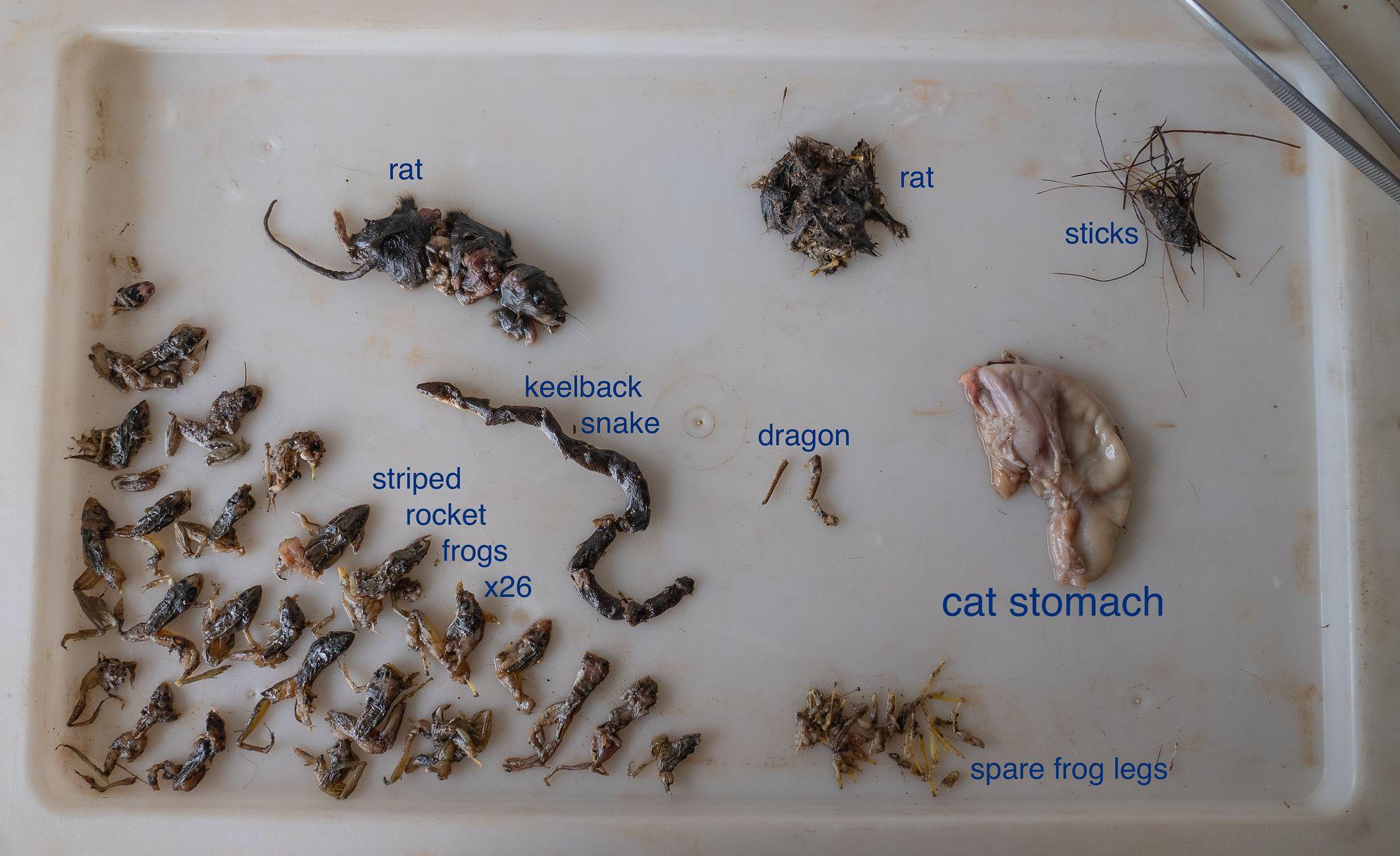
The stomach contents of one feral cat. Source: Conservation Partners
Feral cat expert, Biodiversity Council member Professor John Woinarski from Charles Darwin University, said, “It is great that recreational hunters recognise the problems caused by feral cats and want to help.
“However, in most cases, the feral cat shooting by individuals is not coordinated, intensive or sustained enough to improve outcomes for wildlife - and simply paying a bounty won’t change that,” he said.
However, the Biodiversity Council believes there is potential to harness the interest and skills of recreational shooters and landholders to help reduce the impacts of feral cats on native species.
“Recreational shooting will never replace the need for professional evidence-based programs, but could play a role in supporting those programs to reduce cat impacts under the right circumstances," Woinarski said.
“To really benefit wildlife, programs need to be designed by conservation managers and have a clear strategy and monitoring of outcomes. They would also use other tools such as baiting, trapping, habitat management, and professional shooters."
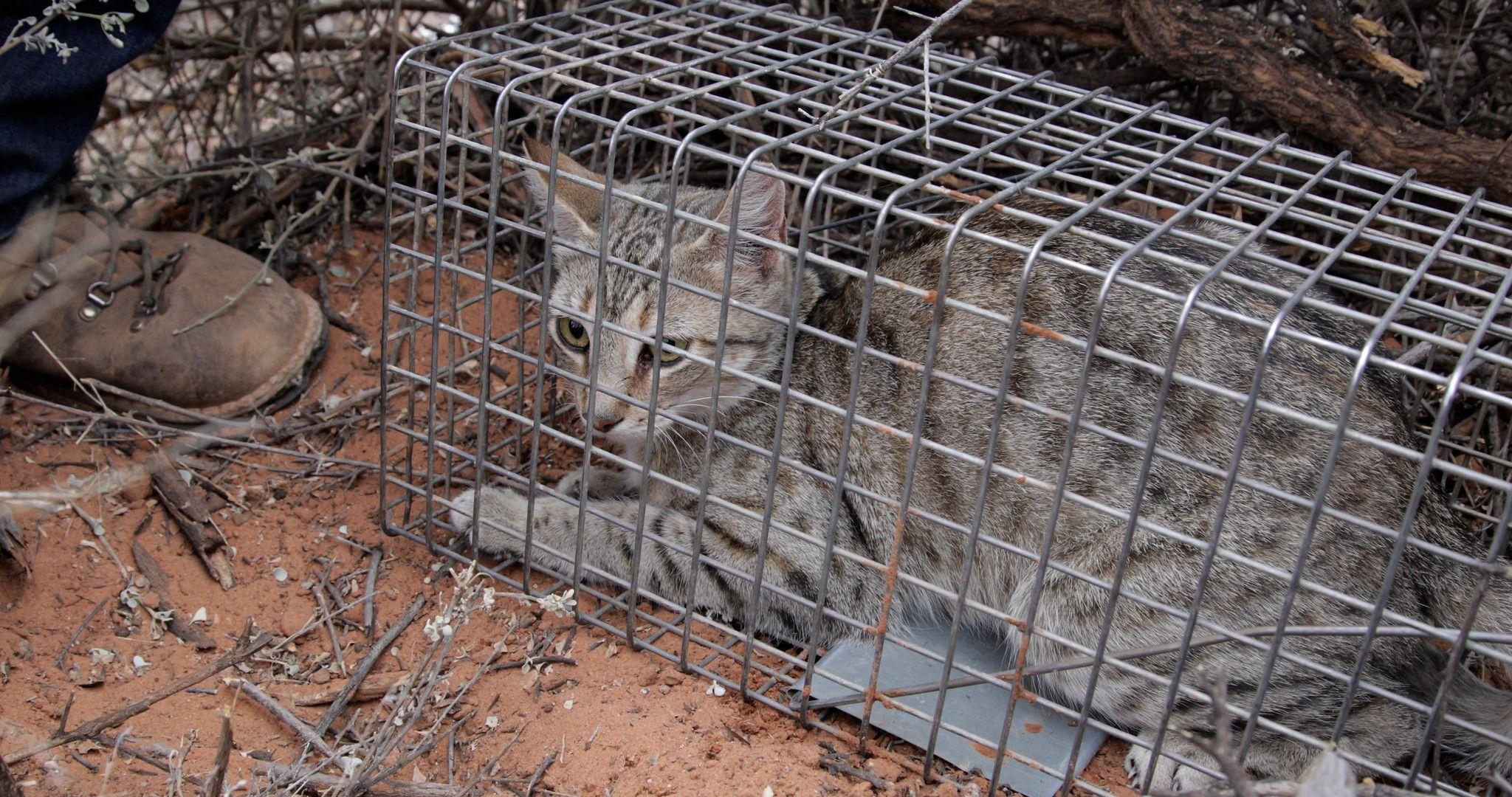
A feral cat caught in a cage trap in arid Australia. Source: Nicolas Rakotopare / Arid Recovery
“The National Threat Abatement Plan for Predation by Feral Cats, developed with experts and stakeholders, identifies a need to work with recreational shooters to trial more effective, sustained control programs.
“Such trials would monitor shooting effort, feral cat populations and outcomes for native species, while also addressing training, animal welfare, costs and legal constraints.
“The aim is to build a clear evidence base and practical guidelines so recreational shooting can genuinely contribute to reducing feral cat impacts on wildlife."
The Biodiversity Council is an independent expert group founded by 11 Australian universities to promote evidence-based solutions to Australia’s most pressing nature-loss problems.