Top marine scientists urge Australia to expand marine sanctuaries and remove industrial threats
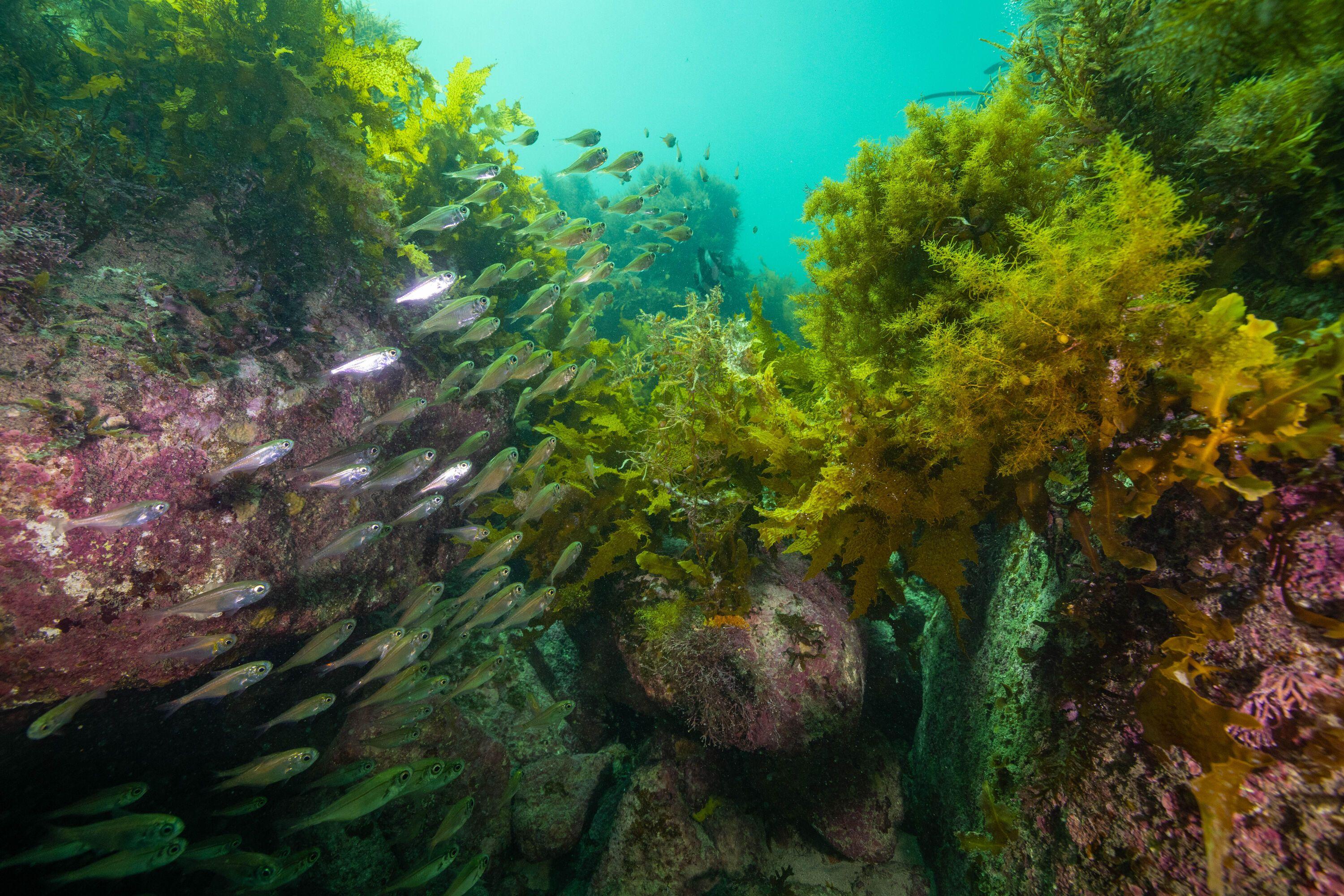
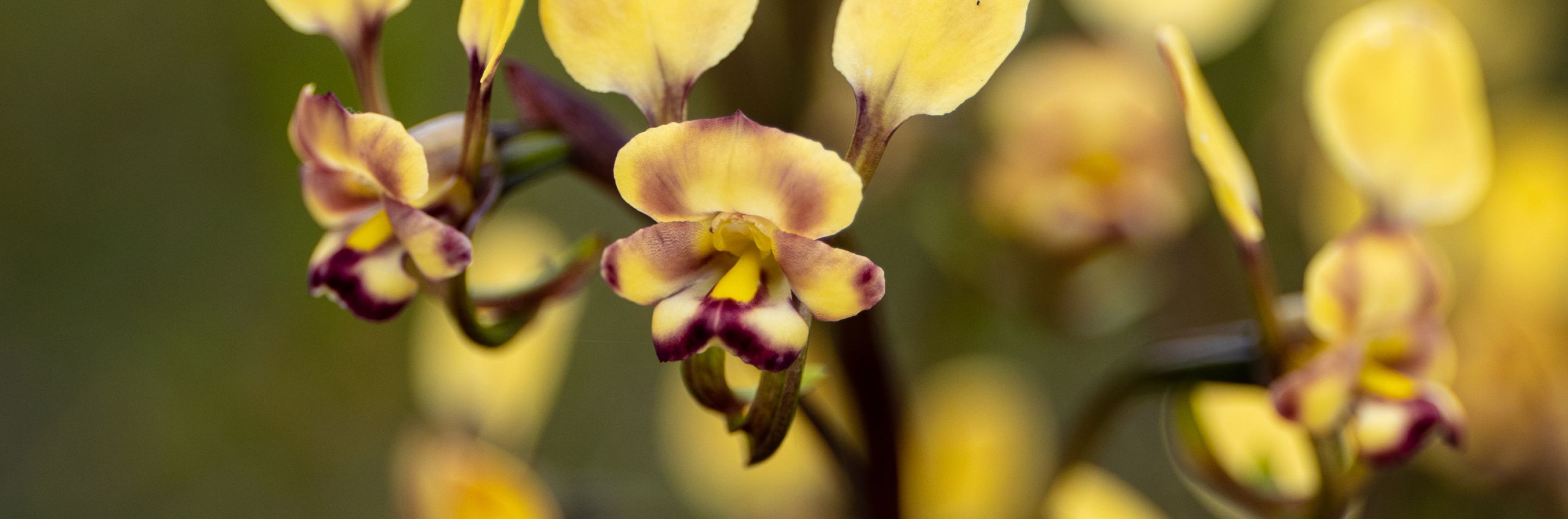
Great Southern Reef kelp forest. Source: Stefan Andrews courtesy Great Southern Reef Foundation
News story
28 August 2026
More than 275 leading marine scientists are urging the Federal Government to strengthen Australia’s marine parks, warning that the waters around mainland Australia remain significantly under-protected.
In a new scientific consensus statement, Securing a Resilient Future for Australia's Oceans, the scientists call for at least 30 per cent of every Australian marine bioregion to be protected in highly protected sanctuary zones, and for industrial activities such as bottom trawling, longlining and mining to be removed from marine parks. The Biodiversity Council has backed the statement.
The call comes as the Federal Government undertakes its once-in-a-decade review of Commonwealth marine parks. Just 9.6 per cent of Commonwealth waters around mainland Australia are highly protected.
The scientists are calling on the Federal Government to implement five key actions:
- Protect at least 30 per cent, as a minimum, of each of Australia’s marine bioregions within highly protected no-take sanctuary zones (IUCN Ia or II), with priority given to mainland Australia.
- Commit to and implement no future downgrading, downsizing, or de-gazettement of existing, highly protected marine park zones.
- Remove industrial extractive activities, including trawling, longlining, and mining, from all marine parks.
- Adequately resource marine park management, enforcement, monitoring, research, and community engagement to avoid the proliferation of ineffective “paper parks”.
- Invest in national communications and education initiatives that improve public understanding of marine park protection levels, ocean stewardship and Indigenous engagement.
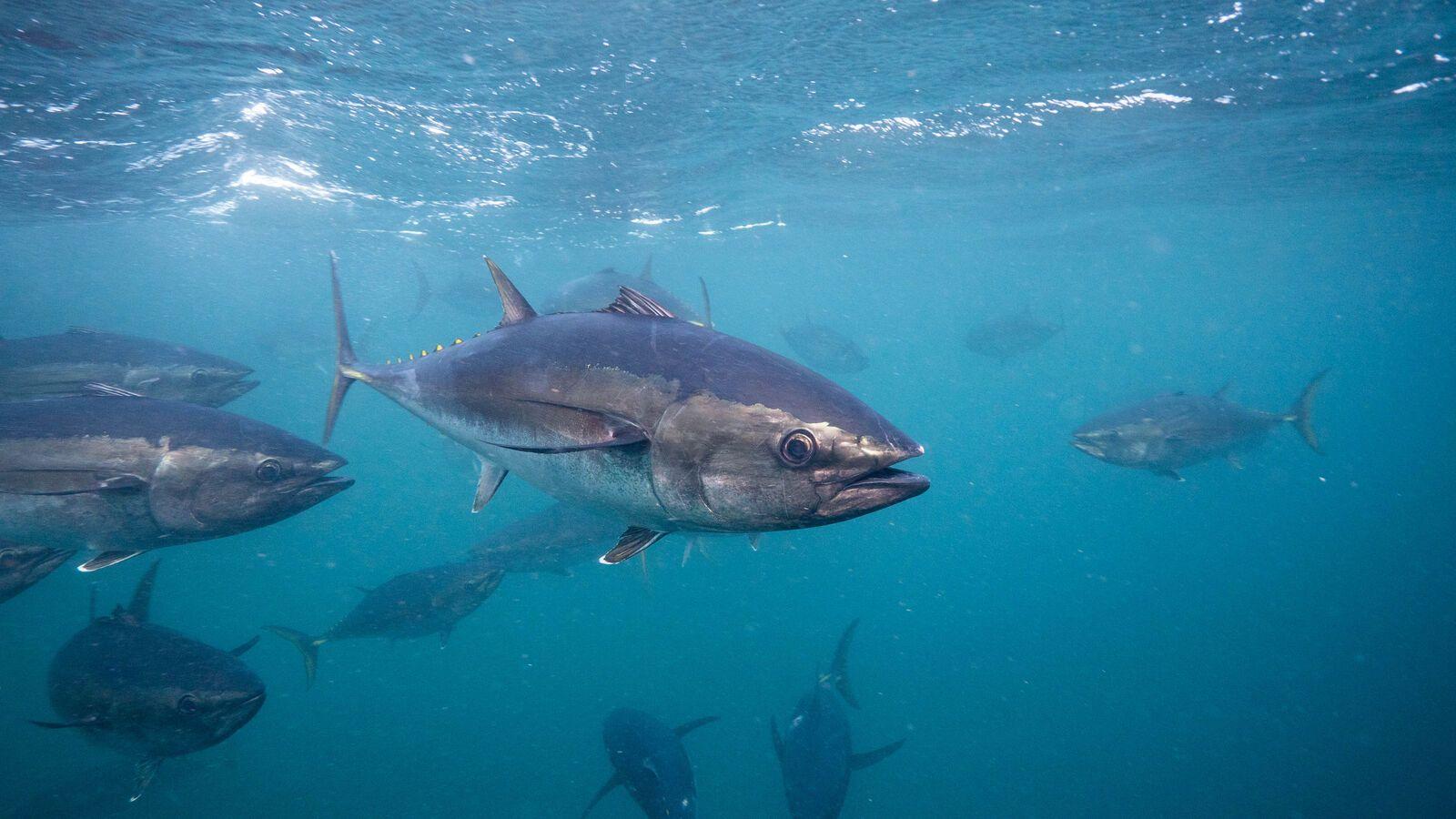
Southern bluefin tuna in Port Lincoln. Image: Stefan Andrews, courtesy Great Southern Reef Foundation
Professor Jessica Meeuwig AM, Wen Family Chair in Conservation at The University of Western Australia and co-author of the statement, said the review would shape the future of Australia’s oceans for generations.
“Australia has built a strong foundation for marine conservation, and this review is an opportunity to build on that success,” Professor Meeuwig said.
“The science clearly shows we need stronger protection where biodiversity, fisheries and human pressures are greatest.
“Around one-quarter of Commonwealth waters are highly protected, but that falls to just 9.6 per cent around mainland Australia. Most sanctuary zones are in remote offshore and territorial waters, while many of our most productive marine ecosystems remain under-protected.
“Bottom trawling and mining remain permitted across roughly one-third of mainland Commonwealth marine parks, even as our oceans face mounting pressure from marine heatwaves, habitat degradation, pollution and expanding ocean use. If we are serious about resilient oceans, that needs to change.”
Associate Professor Carissa Klein, Director of the Centre for Biodiversity and Conservation Science at the University of Queensland and statement co-author, said the review was an opportunity to align Australia’s marine parks with contemporary conservation science.
“Decades of scientific evidence show that highly protected sanctuary zones deliver substantially stronger biodiversity, fisheries, ecosystem and climate resilience outcomes than partially protected areas,” Associate Professor Klein said.
Biodiversity Council Councillor Prof Nicki Mitchell, who co-signed the statement said, “Protecting marine biodiversity is a shared responsibility - this review is the opportunity for Australia to deliver highly protected zones in the right places and at the right scales.”