Watch our webinar: H5N1 Bird Flu and Australian Wildlife
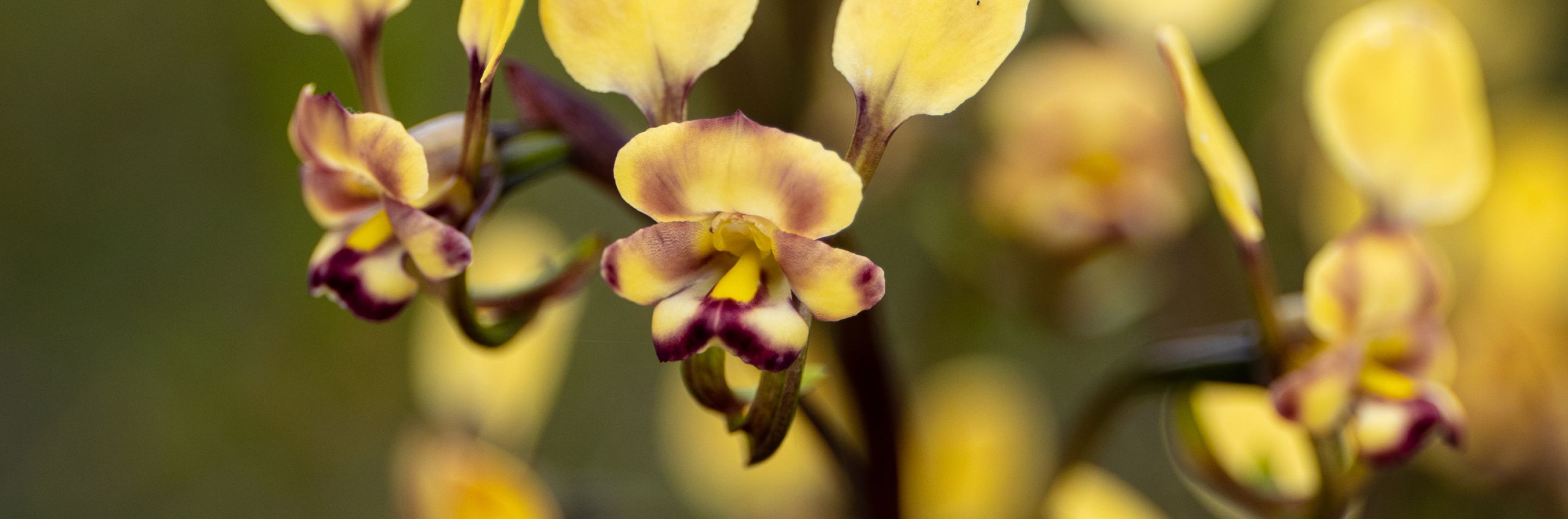
Source: Barry Stewart / iNaturalist CC BY-NC
News story
14 July 2026
Bird flu impacts, emerging risks and how to close gaps in the national response
With reported bird flu cases rising nationwide, government agencies and conservation groups are increasingly focused on what we can do to further prepare and plug potential gaps in the national response.
During Thursday's webinar, we spoke about the impact bird flu has had globally, the risks to Australia's unique native wildlife, how the federal government can increase resilience of the most at-risk natives species and what we can all do to mobilise action and mitigate harm.
Leading conservation groups are calling on the federal government to invest $200 million to deliver a five-point plan over two years.
To help give Australia’s wildlife a fighting chance against bird flu, please follow the Invasive Species Council’s lead and write to Environment Minister Murray Watt supporting our call for increased investment.
This webinar is a collaboration between Australian Marine Conservation Society, Biodiversity Council, BirdLife Australia, Doherty Institute, Invasive Species Council and Wildlife Health Australia.
Webinar speakers and topics
- MC Kate Millar, CEO of BirdLife Australia.
- Dr Michelle Wille, ARC Future Fellow at the Doherty Institute, University of Melbourne. Topic: Impacts of H5N1 bird flu globally and the risk to Australia’s wildlife.
- Dr Tiggy Grillo, National Coordinator and COO of Wildlife Health Australia. Topic: Lessons from the global response and what’s being done in Australia.
- Shandell Cummings, a Menang woman from the south coast of Western Australia and University of Western Australia academic and artist. Topic: Cultural, Spiritual and Physical risks of bird flu on First Peoples.
- Dr Dale Wright, Director Science and Priority Landscapes at BirdLife Australia and Acting Executive Director Conservation & Science. Topic: Risk to native birds and what’s needed to mobilise support.
- Alexia Wellbelove, Campaigns Director at the Australian Marine Conservation Society. Topic: Risk to native mammals and other wildlife and what’s needed to mobilise support.
- Jack Gough, CEO of Invasive Species Council. Topic: Building resilience – Expanding threat mitigation actions for priority sites and species.
Q&A
What is H5N1 bird flu?
H5N1 bird flu is a strain of highly pathogenic avian influenza (HPAI) that once primarily impacted poultry, but has since evolved to infect wild birds and mammals. This particularly deadly variant of H5N1 is called 2.3.4.4b.
Since late 2020, this variant has spread globally, killing millions of wild birds and tens of thousands of mammals.
While H5N1 can infect humans, cases remain rare and it has not been documented to spread from person-to-person.
Has it reached Australia?
Yes. Australia reported its first mainland case of H5N1 in June 2026, in a migratory brown skua on the southern coast of Western Australia.
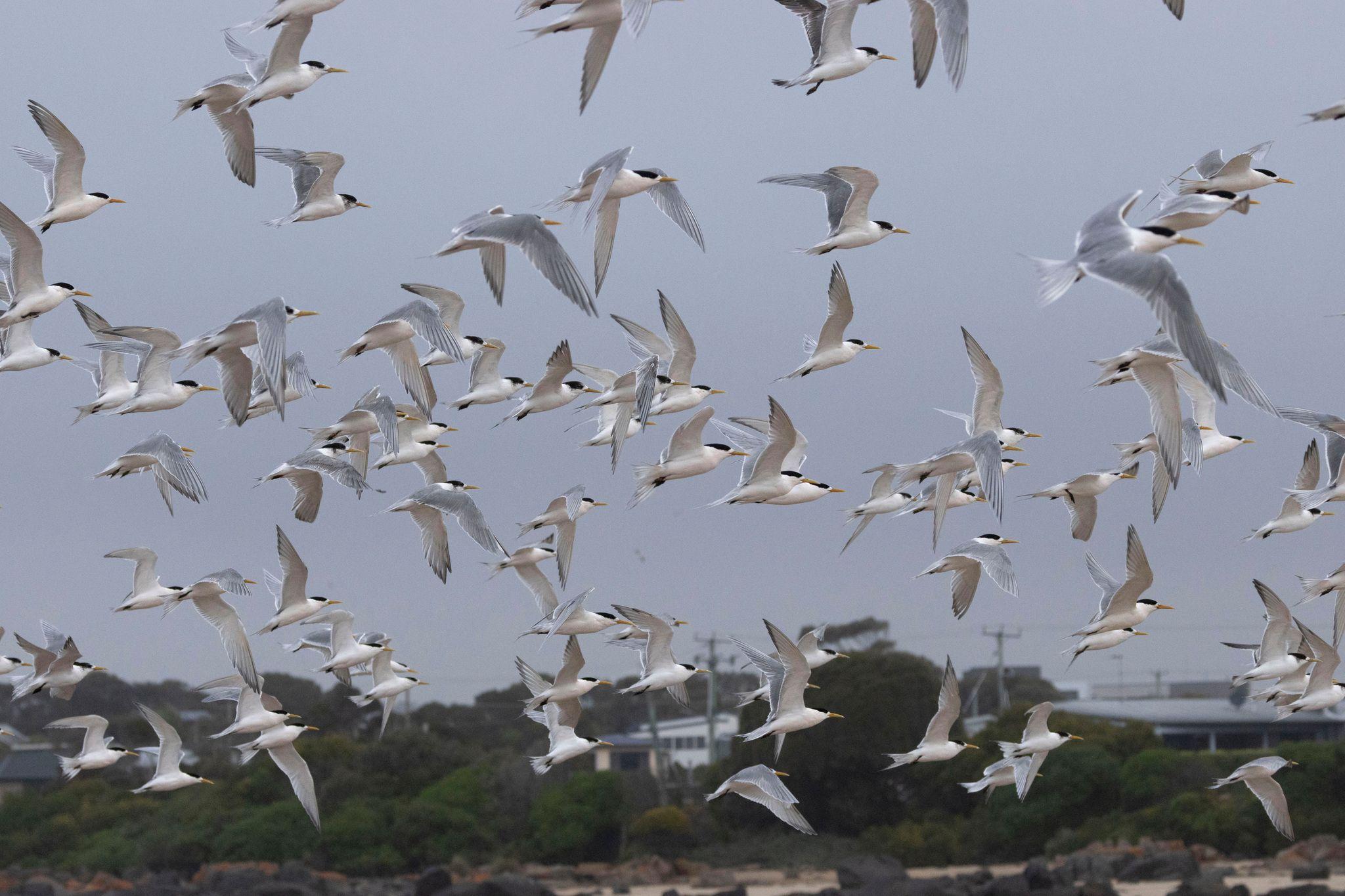
As of mid-July 2026, more than a dozen cases had been confirmed in migratory birds and the first case in a wild, non-migratory mainland bird was confirmed in a greater crested tern in Robe, South Australia. Although there has been no evidence yet of large-scale wildlife deaths on the mainland, government agencies and nature groups are on high alert.
For more up-to-date information on the progress of H5N1 bird flu in Australia, see the official Government site.
Is H5N1 bird flu dangerous to people?
The risk to people is very low. The Australian Centre for Disease Control advises that human infections are rare and generally follow close contact with sick birds or contaminated environments.
There have been no documented cases of the 2.3.4.4b variant spreading from person to person.
What should I do if I find a sick or dead bird?
If you notice any unusual illness or death in wild birds and other wildlife, remember to AVOID, RECORD, REPORT:
- AVOID contact, including leashing pets where infected animals may be present
- RECORD what you see, the location and take photos from a distance
- REPORT via the Emergency Animal Disease Hotline on 1800 675 888
Even a single sick or dead seabird, waterbird, shorebird or bird of prey is worth reporting. Please do not collect, move or bury carcasses yourself – trained authorities manage that.
For more information, see:
- BirdLife Australia’s dedicated page for the latest news
Can I still walk my dog at the beach, visit wetlands and reserves or birdwatch?
Yes. Spending time in nature is still safe and is good for your mental and physical health.
H5N1 bird flu typically only spreads to people and pets through close contact with sick birds, so avoiding contact is advised. In reserves, keep to paths and follow signage to avoid disturbing wildlife. Near beaches, lakes and wetlands, keep your dog on a lead – this protects birds and keeps your pet away from anything that might be infected. Do not let pets touch or eat dead or dying birds, or swim where sick birds have been seen.
Are my pets and backyard chickens at risk?
The risk to backyard chickens, pet birds and household pets is generally low. A few simple steps help:
- Keep dogs on a lead near bird habitat. Off-leash dogs can disturb and attack native wildlife. When animals spend time fleeing dogs, they miss out on time to eat, rest and feed their young, making them less resilient to fighting off infection.
- Keep cats away from wild birds. The surest way to do so is to keep cats indoors or in an enclosed outdoor space. Research shows that, on average, pet cats that are allowed to roam kill more than three animals every week, greatly increasing their risk of exposure to infection.
- Keep your chickens’ feed and water clean, and reduce contact between your birds and wild birds. Always thoroughly wash your hands with soap before and after handling birds or any water and feed that birds have used.
Should I keep feeding wild birds or putting out water?
We strongly advise against feeding wild birds at this time, because feeding draws birds close together and helps disease spread.
Bird baths may still be used if you clean them frequently. This advice may change as the situation develops.
Always thoroughly wash your hands with soap before and after handling birds or any water and feed that birds have used, including bird baths.
Which birds and animals are most at risk?
All wild birds are potentially susceptible. The greatest risk is to birds that gather in dense colonies at only a few sites, and to scavengers such as birds of prey, gulls, skuas and petrels. Threatened species of particular concern include the Christmas Island frigatebird, Abbott's booby and Gould's petrel.
Mammals are also affected, particularly predators and scavengers like the Tasmanian Devil, quoll and rakali, and marine mammals such as seals and sea-lions that live alongside seabirds.
In total, over 400 species of birds and 60 species of mammals have been affected globally. While there is no way of knowing how H5N1 will impact Australia’s unique wildlife, we must prepare for the scale of deaths seen in populations overseas.
Governments and conservation groups are identifying species most at risk and in need of priority action by assessing their combined susceptibility and vulnerability to H5N1:
- Susceptibility – how likely will a population encounter H5N1, get infected and die?
- Vulnerability – how will infection affect the national population, i.e. could it wipe out an entire population or species?
Can sick birds be treated or vaccinated?
Sadly, wildlife that fall ill with H5N1 bird flu usually die within a few days, and treatment has rarely succeeded overseas. A vaccine for birds exists, but vaccinating wild birds at large scale is not feasible. The Australian Government has developed a policy on the use of avian influenza vaccines for the protection of rare, protected and valuable bird species.
The most effective protection for wildlife is to keep populations healthy and resilient before an outbreak hits. Investing in habitat protection, threat reduction, monitoring and conservation action can help give Australia’s wildlife a fighting chance.
What is being done to protect Australia's wildlife?
The Australian Government has allocated $113 million to strengthen surveillance, preparedness and response capability.
- $43.9 million to enhance national coordination of response arrangements and communications, strengthen surveillance and boost biosecurity capacity and capability.
- $47.1 million to identify the most at-risk species and sites, and develop preparedness and response plans. A further $11.2 million was announced in the 2026-27 Budget to bolster preparedness efforts.
- $22.1 million to increase the amount of ready-to-use pandemic flu vaccines and antivirals in the National Medical Stockpile (NMS).
Wildlife Health Australia leads the National Avian Influenza Wild Bird (NAIWB) Surveillance Program, which supports Australia’s capacity to rapidly detect and respond to H5N1 cases.
With reported bird flu cases rising nationwide, the Biodiversity Council has joined leading conservation groups in calling on the federal government to invest $200 million to deliver a five-point plan over two years to further strengthen wildlife resilience. But experts have noted this amount may need to increase significantly as the disease spreads.
To help give Australia’s wildlife a fighting chance against bird flu, please follow the Invasive Species Council’s lead and write to Environment Minister Murray Watt supporting our call for increased investment.
How can I help?
- Avoid contact, including leashing pets where infected animals may be present
- Record suspected cases, including what you see, the location and take photos from a distance
- Report to authorities via the Emergency Animal Disease Hotline on 1800 675 888
- Share trusted information from sources like the Australian Government, BirdLife Australia and Wildlife Health Australia, and help counter misinformation
- Support our call for increased investment to give wildlife the best chance of surviving an outbreak