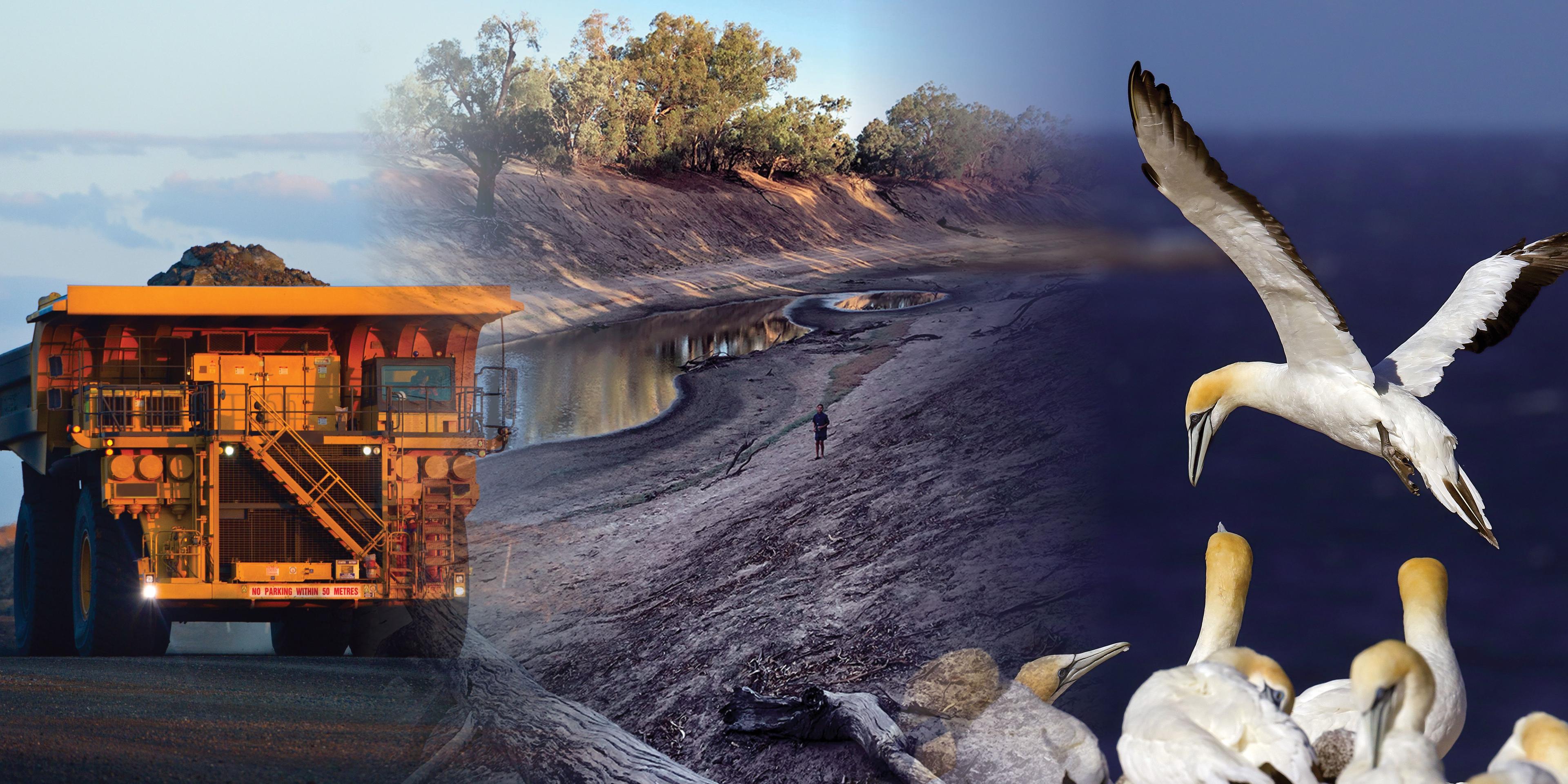
Australia’s policy choice: should government investment help or harm nature?
Research shows that the Australian Government spends almost as much subsidising nature-damaging activities as is needed to meet all of Australia's international biodiversity conservation commitments.
The Biodiversity Council is a registered Australian not-for-profit charity, recognised by the Australian Charities and Not-for-profits Commission (ACNC), meeting national standards for integrity, transparency and accountability.
Acknowledgements
The Biodiversity Council acknowledges the First Peoples of the lands and waters of Australia, and pays respect to their Elders, past, present and future and expresses gratitude for long and ongoing custodianship of Country.
The Biodiversity Council is an independent expert group founded by 11 Australian universities to promote evidence-based solutions to Australia’s biodiversity crisis. It receives funding from 11 university partners and The Ian Potter Foundation, The Ross Trust, Trawalla Foundation, The Rendere Trust, Isaacson Davis Foundation, Coniston Charitable Trust, Angela Whitbread and the Nature Impact Collective.
Newsletter subscriptions
*You can read ourprivacy notice to learn how we handle the personal information of people who subscribe to our newsletter.
How do we know Australia is in a biodiversity crisis? A summary of the science
15 January 2024
This article summarises the findings of many studies about how Australia's native plants, animals and ecosystems are doing. The results show that Australia is in a biodiversity crisis.
8 ways to tone down the Christmas lights to help wildlife - and why we should
12 December 2023
The Australian government has launched a campaign asking people to “switch off light pollution” to protect wildlife. So, what does the science say? Should we rethink Christmas lights?
Can the government’s new market mechanism help save nature? Yes – if we get the devil out of the detail
6 December 2023
Australians woke up this morning to discover they had a nature repair market, after the legislation passed late last night. Except it won’t be called a market, and it won’t include biodiversity offsets.
We must assess ‘cumulative impacts’ to protect nature from death by a thousand cuts
30 October 2023
Australia’s national environment protection law ignores the big picture; here we look at the how multiple projects can have a cumulative impact on nature, and what needs to change.
Humpback whales hold lore for Traditional Custodians. But laws don’t protect species for their cultural significance
3 October 2023
For saltwater people of Australia’s east and west coasts, humpback whales hold important lore in the form of stories , yet protecting species for their cultural significance is not possible under Australian law. Here's why we need this to change.
Trapped: Australia’s extraordinary alpine insects are being marooned on mountaintops as the world warms
24 August 2023
Insects and other invertebrates do essential jobs such as pollinating plants, improving soils and controlling pests. But, as the world warms, will they cope?
97% of Australians want more action to stop extinctions and 72% want extra spending on the environment
20 June 2023
Most Australians (97%) want more action to protect nature, even if they don’t know the full extent of the biodiversity crisis. That’s the startling finding emerging from our first national survey of 4,000 voters.
‘Too small and carefree’: endangered animals released into the wild may lack the match-fitness to evade predators
6 June 2023
Breeding threatened mammals in fenced, predator-free areas is a common conservation strategy in Australia. But new research suggests the strategy may put animals at a distinct disadvantage once they’re fending for themselves.
Summer bushfires in unprecedented detail. Here are 6 lessons to heed
2 June 2023
The Black Summer bushfires of 2019-20 were cataclysmic: a landmark in Australia’s environmental history. Over 200 experts have fed their knowledge into a new book that synthesises the extent of the losses. Here are six key lessons we learnt...