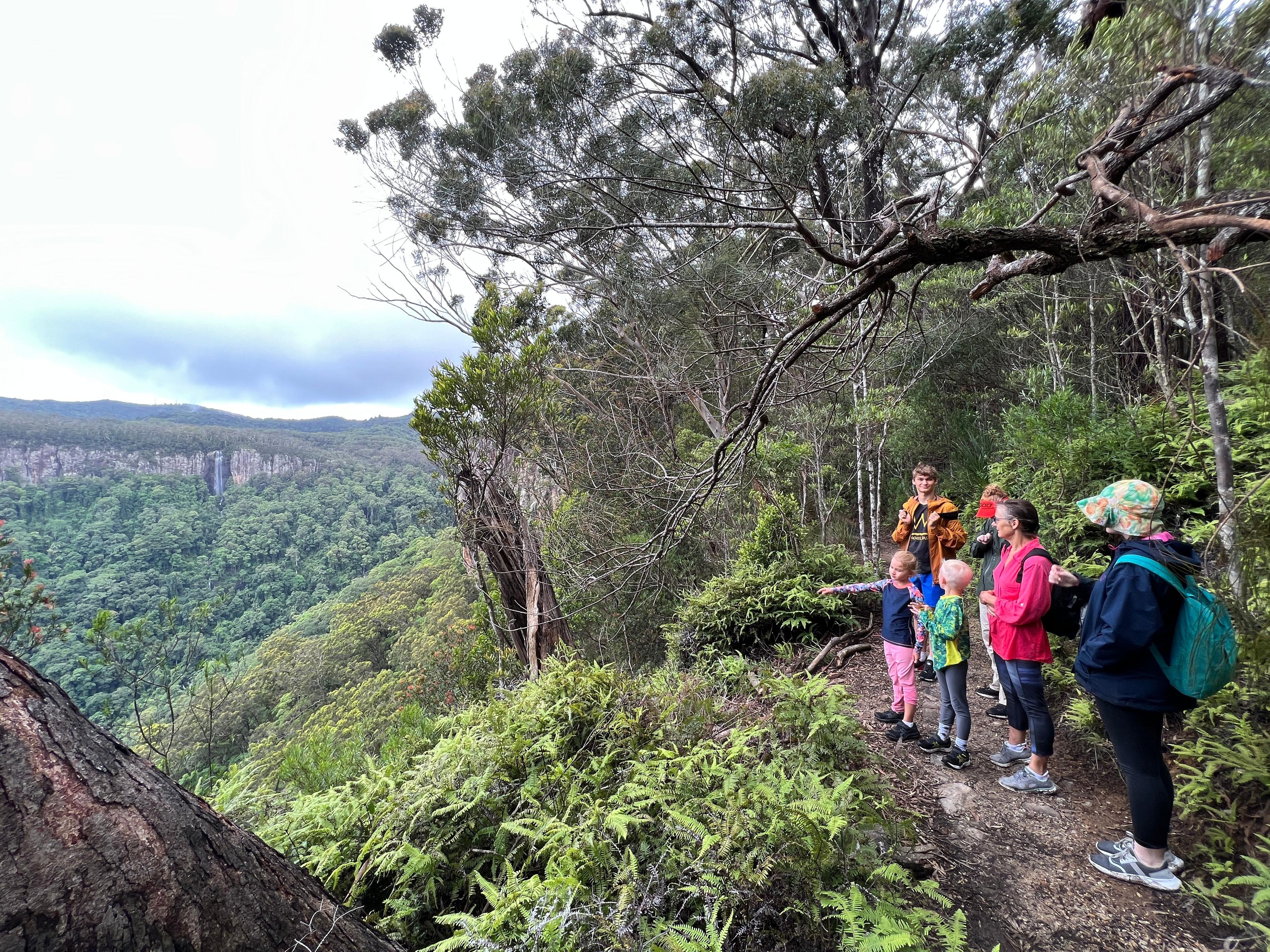
A family enjoying the view at Springbrook National Park. Photo: Jaana Dielenberg
2026 Biodiversity Concerns Survey Interim findings: Community support for action to protect nature and uphold international conservation commitments.
Factsheet
20 October 2026
Overview
The Biodiversity Council’s 2026 Biodiversity Concerns Survey has found overwhelming public support for Australia meeting its international commitments to protect nature, and widespread agreement that more action is needed to look after the natural environment.
First conducted in 2023, the annual Biodiversity Concerns Survey measures Australians’ attitudes towards nature, biodiversity loss, conservation policies and pro-nature behaviours. Repeating key questions enables changes in community attitudes to be tracked over time, while new questions examine emerging issues and policy priorities.
Survey methodology and reliability
The 2026 survey was undertaken by Monash University’s BehaviourWorks Australia on behalf of the Biodiversity Council, with expert scientific review by the council’s Practice Change Committee, which includes social scientists from Monash University, the University of Melbourne and the University of Queensland. The research was approved by the Monash University Human Research Ethics Committee (Project ID: 36212). The methodology is described in the peer-reviewed open-access journal Biodiversity and Conservation by Borg et al (2024), together with the data from the first year of the survey in 2023.
The interim analysis includes 4,517 respondents from across Australia, following comprehensive data-quality screening. Of 5,992 original responses, 1,475 were excluded for incomplete responses, failed attention checks, unusually rapid completion, repetitive response patterns and inconsistent location information. This filters out respondents who are not genuinely reading questions and completing answers, or who may be using AI bots.
Results were weighted against Australian Bureau of Statistics population data for age, gender and geographic location. This adjustment reduces the influence of groups that were over- or under-represented in the sample and improves its comparability with the Australian adult population.
Together, these measures strengthen confidence in the findings as evidence of community attitudes towards biodiversity and environmental protection.
Key interim findings
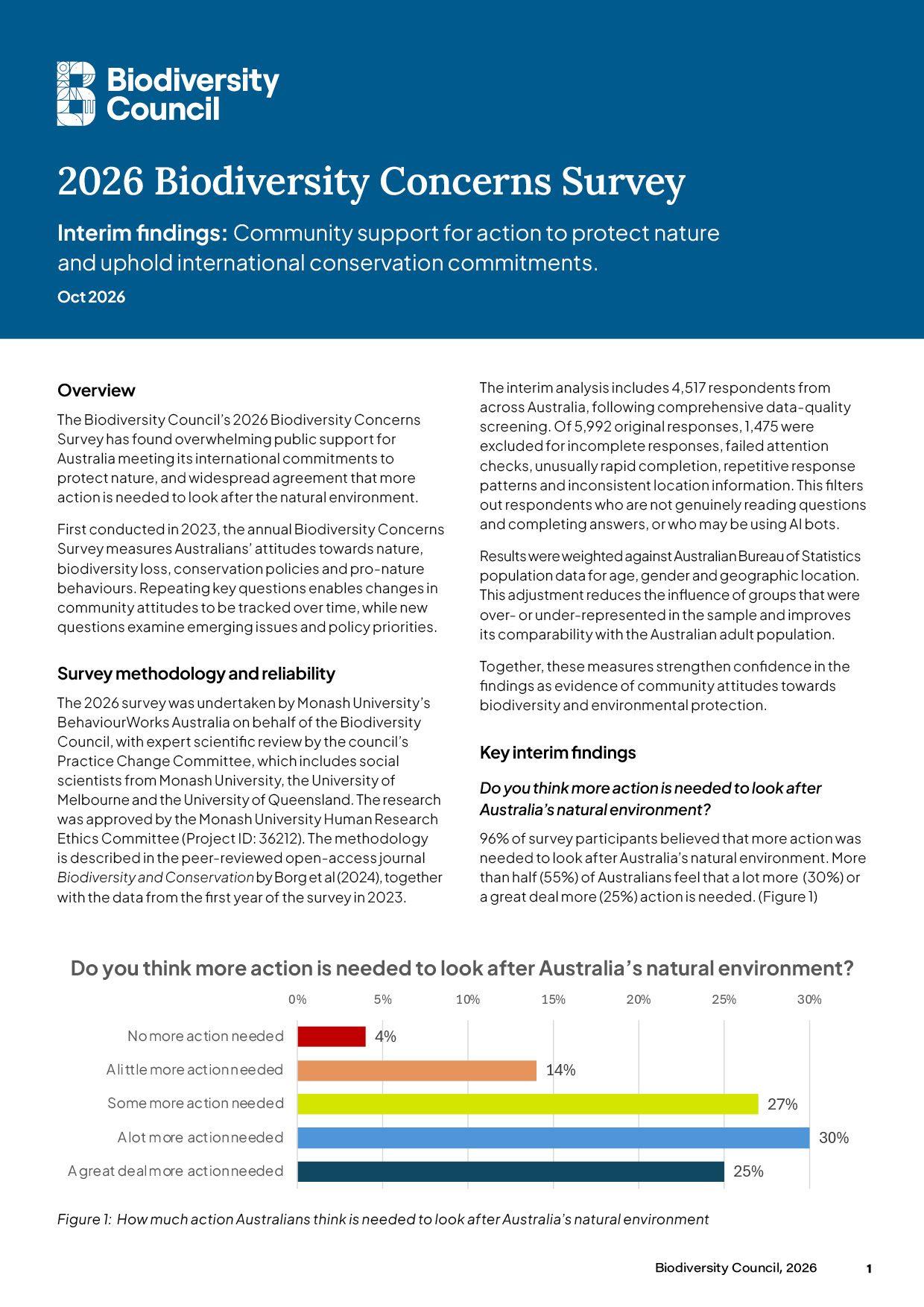
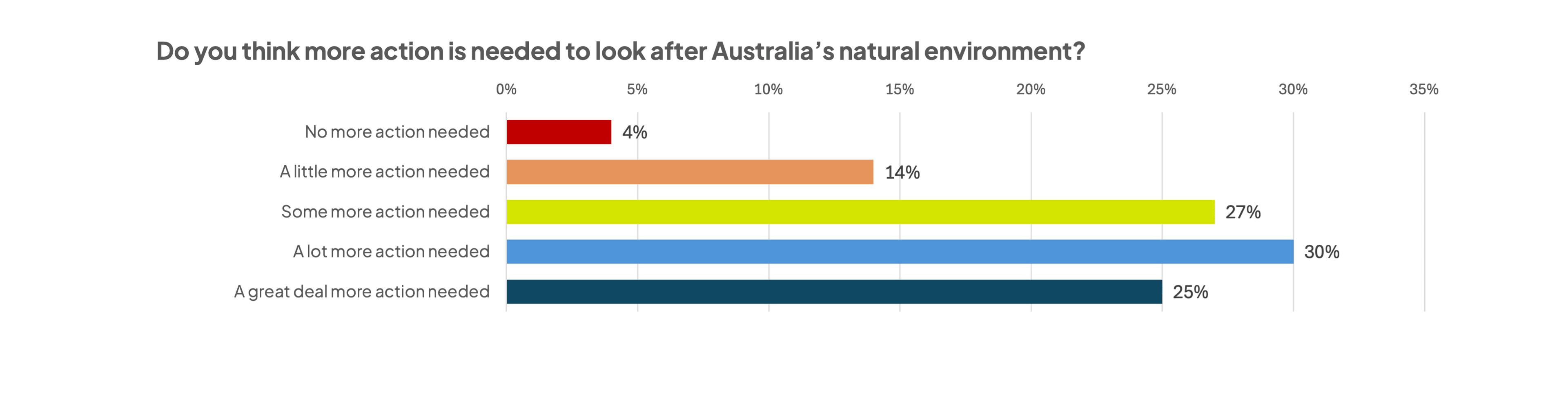
Do you think more action is needed to look after Australia’s natural environment?
96% of survey participants believed that more action was needed to look after Australia’s natural environment. More than half (55%) of Australians feel that a lot more (30%) or a great deal more (25%) action is needed. (Figure 1)
How important do you think it is for Australia to uphold international environmental obligations?
Along with most other nations, the Australian Government has committed to a range of international environmental obligations, including the 23 targets of the Kunming-Montreal Global Biodiversity Framework under the United Nations Convention on Biological Diversity, the UNESCO World Heritage Convention and Paris Agreement.
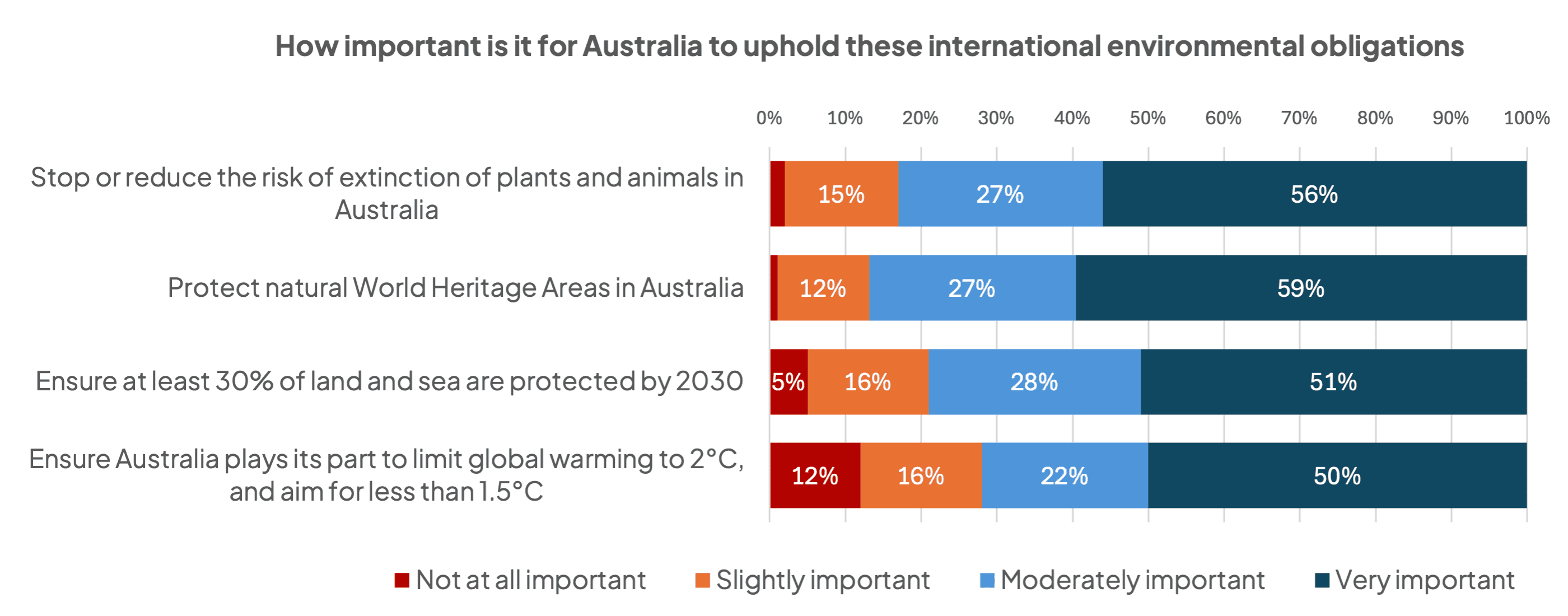
Survey participants were asked about how important they think it is for Australia to uphold four of these obligations. The findings are summarised below and in Figure 2.
- Stop or reduce the risk of extinction of plants and animals in Australia: 98% of Australians think this is important, while 59% think it is very important.
- Protect natural World Heritage Areas in Australia: 98% of Australians think this is important, while 56% think it is very important.
- Ensure at least 30% of land and sea are protected by 2030: 95% of Australians think this is important, while 51% think it is very important.
- Ensure Australia plays its part to limit global warming to 2 °C and aim for less than 1.5 °C: 88% of Australians think this is important, while 50% think it is very important.
Overall, these results indicate that the vast majority of Australians (88% - 98%) believed it is important to uphold environmental commitments made under international conventions, while at least half of all Australians (50% - 59%) think it is very important.
Implications
Together, these findings indicate a strong community expectation that Australia should take further action to protect nature and fulfil its international conservation commitments.
The results provide timely evidence of public attitudes as Australia and other countries assess progress towards their 2030 biodiversity targets at the United Nations Convention on Biological Diversity conference (COP17) in Yerevan, Armenia, from 19–30 October.
Further findings, including analysis of demographic, geographic and political differences, will be presented in the Biodiversity Council’s full 2026 Biodiversity Concerns Survey report, scheduled for release in early 2027.
Reference
Borg, K., Hatty, M., Klebl, C. et al. (2024) Backing biodiversity: understanding nature conservation behaviour and policy support in Australia. Biodivers Conserv 33, 2593–2613. https://doi.org/10.1007/s10531-024-02875-0
Acknowledgements
The 2026 Biodiversity Concerns Survey was supported by Pew Charitable Trusts, Australian Wildlife Conservancy and Bush Heritage Australia. Dr Meg Shaw and Dr Kim Borg at Monash University’s BehaviourWorks Australia led and carried out the Biodiversity Concerns Survey. Interim report draft and design by Jaana Dielenberg, Biodiversity Council.