Webinar: Fixing federal nature spending - changing government investment from harming to helping
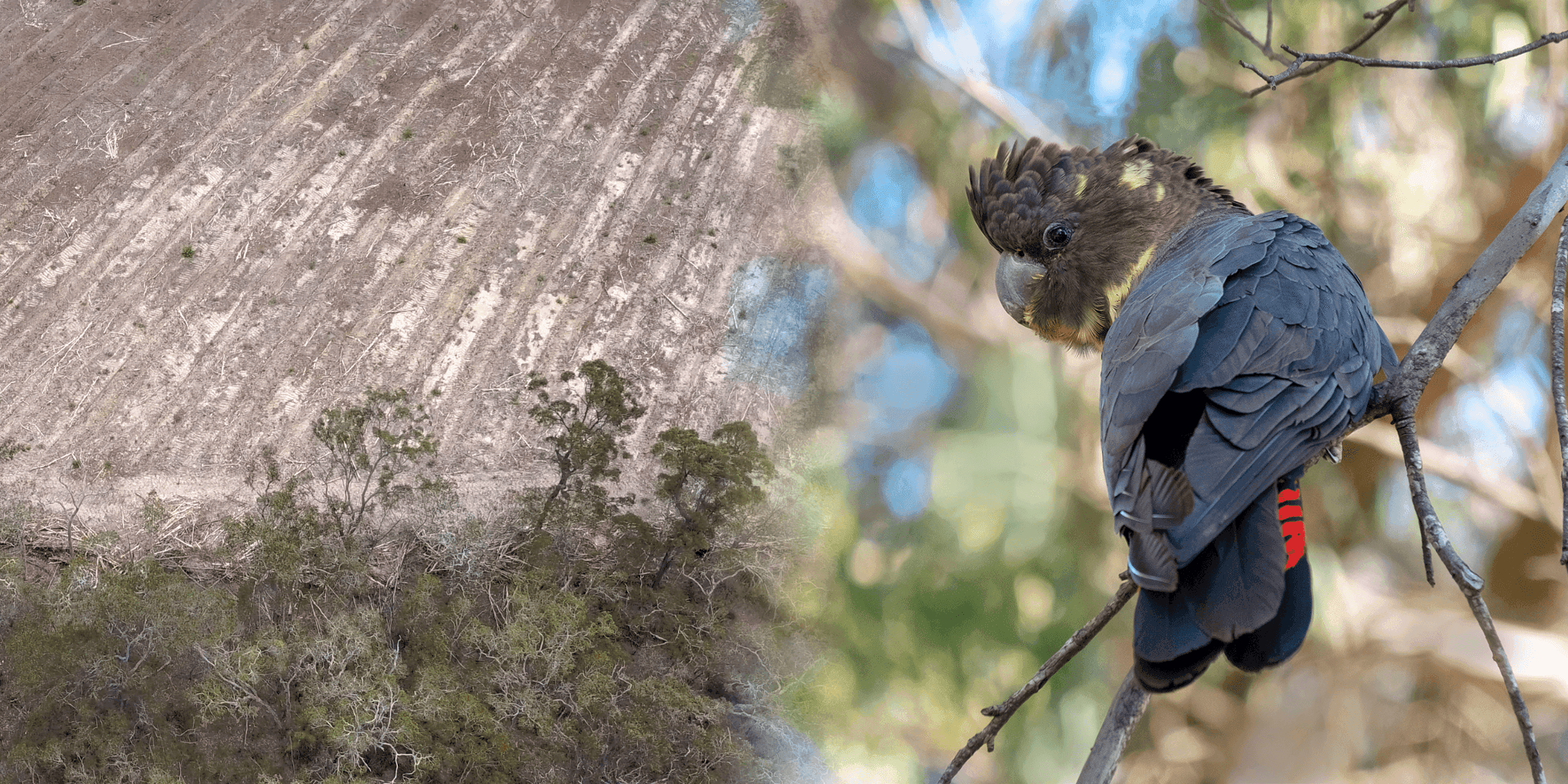
Nature is rapidly declining in Australia, threatening culture, food security, water quality, human health, climate resilience and the economy.
In order to halt and reverse biodiversity loss, governments must come to grips with the scale of funding required - and also move away from nature harming subsidies.
So how much money is actually needed to halt nature loss and to recover threatened and culturally significant plants, animals and ecosystems in Australia? And how does that compare to current levels of government investment in activities that help or harm nature?
In this interactive webinar, experts examine current federal spending on nature and unpack how to redirect public funding to better support nature, including strengthening Indigenous-led management of Desert Country.
Our webinar speakers and topics:
- Mai Nguyen, Engagement Manager at Cyan Ventures, with over 8 years experience as an economic consultant. Topic: How much is being spent to help nature in Australia?
- Jon Hodgetts, Partnerships Manager, Indigenous Desert Alliance. Topic: Better funding to support Indigenous-led management of Desert Country.
- Paul Elton, environmental policy expert and Doctoral Researcher at the Australian National University. Topics: What would it cost to save nature - the cost of delivering our Biodiversity Framework Commitments & Changing government spending from harming nature to helping.
- Prof Brendan Wintle, Director of the Melbourne Biodiversity Institute, Professor in Conservation Ecology at the University of Melbourne. Topic: The cost of preventing land and sea extinctions in Australia - the case to continue and expand the Saving Native Species Fund.
If you, like 95% of Australians, think the federal government should invest more in nature protection, join us in calling for the Australian Government to end support for nature destruction and start investing 1% to restore it.
Q&A
How much does the Australian Government spend on actions to protect and restore biodiversity?
According to Australian Land and Conservation Alliance (ALCA)'s Nature Spend Tracker, the Australian Federal Government was estimated to spend $649 million on biodiversity programs in FY25. That's just 0.1% of the federal budget.
91% of this expenditure comes from only five core programs, one of which - the Saving Native Species program, a 4-year program that aimed to recover threatened species and ecological communities - ends in 2026, with no new funding announced.
Meanwhile, the Australian Government spends $26 billion per year on financial subsidies and tax breaks for activities that damage the environment, including fossil fuel extraction and large mining projects. That's 4% of the federal budget.
How much does the Australian Government need to spend to recover biodiversity?
In 2022, Australia was among 196 countries that agreed on a global plan to halt and reverse the destruction of nature by 2050 - the Kunming-Montreal Global Biodiversity Framework (GBF). The GBF details 23 action targets, with specific goals to be met by 2025 and 2030. To achieve these targets, there must be a significant uplift in investment from governments, especially considering the failure to achieve the previous 20 Aichi Biodiversity Targets in the last decade.
Paul Elton's study, currently under peer review, reveals that governments must spend around $28.5 billion per year from 2025 to 2050 to deliver on the GBF, which is about 1.2% of Australia's GDP.
The implications of this study are clear: Australian governments need to make urgent commitments to scale up public investments in conservation and establish new intergovernmental arrangements to align priorities to enable reforms and share funding responsibilities fairly between the Commonwealth and the States and Territories.
Is this a big ask? "The World Economic Forum estimates that more than half of global GDP is moderately or highly dependent on nature and its services. I would argue it's more like 100%, as you cannot have, in my opinion, a society and an economy without a healthy and functioning environment. So when I say the cost is around 1.2% of Australia's GDP, that's 1.2% to secure the natural systems that the other 98.8% of our economy depends on," said Paul Elton in the webinar.
Other studies that have looked specifically at recovering threatened species have found that the Australian Government must spend $2 billion per year to save terrestrial species and around $340 million per year to save marine species. At most, the Government has aimed to spend just $80 million per year under its Saving Native Species program, but actual spending fell far short of this and there is currently no plan to continue this program beyond 2026.
How can governments better support Indigenous-led management of desert Country?
Indigenous Rangers are already delivering extraordinary outcomes across Australia's deserts - for culture, biodiversity, climate resilience and community wellbeing.
What's missing is long term, coordinated funding that matches the scale and importance of the work. Currently, federal government support is split across agencies, with core Ranger funding coming from the Indigenous Ranger Program, overseen by NIAA, and the Indigenous Protected Areas program, managed by DCCEEW.
The funding for the right way fire program comes from another bucket altogether, the Natural Heritage Trust.
For many Ranger teams, the fractured funding results in an overburden on reporting and grant management that can expire before the next funding round is open and results in loss of skilled staff and organizational knowledge, let alone the momentum.
The value of Indigenous land management is beyond reproach and therefore the challenge ahead is not improving its value, but in sustaining the effort.
Desert ecosystems, Indigenous governance systems and cultural knowledge systems all operate over long term horizons. Short term, fragmented funding undermines exactly the coordination, learning and trust that makes these programs effective.
Long term investment enables ecological processes to function properly, knowledge to be passed on, retention of skilled staff. It allows Ranger programs to mature and stabilize, and conservation outcomes to scale across boundaries.
"If we're serious about caring for one third of Australia, we need funding models that reflect our deserts and Indigenous systems that actually work. These are not new ideas. They are proven, Indigenous-led solutions. With the right support, desert Rangers will continue caring for Country in ways that benefit all Australians now and for generations to come," said Jon Hodgetts in the webinar.
What is the purpose of biodiversity harmful subsidies and what happens if we get rid of them?
An independent study, led by PhD candidate Paul Elton at The Australian National University, identified 36 separate Australian Government subsidies for activities that are driving environmental decline, such as native forest logging, fossil fuel mining and projects that clear native vegetation. They include $22.5 billion per year in direct payments from the government and an additional $3.8 billion per year in tax concessions, totalling $26.3 billion per year, based on 2022-23 data.
Many of these subsidies have been put in place historically to serve a particular policy objective - whether that policy objective has been achieved or if the subsidies are still needed is rarely reviewed. Most of the time, the harm to biodiversity is effectively an unintended consequence.
The Biodiversity Council is calling for the Australian Government to request the Productivity Commission to undertake an independent assessment of these subsidies that might be harmful to the environment. Our study can be used to prioritise subsidy areas that require more detailed consideration.
The questions the Productivity Commission should be asking are, what were the original policy objectives? Are those policy objectives still relevant today? Can those policy objectives be achieved in other ways that are not harmful to biodiversity?
We're not suggesting that all of the $26 billion per year currently spent on harmful subsidies will be put into positive conservation action. But it is a massive opportunity to review this spending, to understand which subsidies may no longer be required, which policy objectives might have gone away and to repurpose subsidies within a sector so they're not harming biodiversity.
The other reality is that many of them are market distorting. Many of the benefits flow to typically higher income earners, typically to men.
There is a really compelling case for these to be subject to periodic review, including in relation to the issue of harm to nature.
Are there examples from other countries where harmful subsidies have been phased out or reduced that Australia can learn from?
International experience shows that progress is possible, even if slow. An OECD review of 23 national assessments spanning 12 countries provides the most comprehensive scan of approaches to date.
Italy offers a particularly instructive model: a cross-portfolio commission managed the gradual conversion of existing harmful subsidies into environmentally friendly ones, without altering the overall size of transfers to those sectors. This intra-sectoral repurposing approach minimises structural adjustment disruption while still redirecting fiscal flows toward better outcomes.
The FAO, UNDP, and UNEP have similarly examined how agricultural support globally could be repurposed to transform food systems rather than simply cut, protecting livelihoods while reducing environmental harm.
Europe has moved furthest in this area, with the European Commission undertaking systematic national assessments and developing a toolbox for phasing out harmful subsidies. WWF analysis has suggested that repurposing biodiversity-harmful subsidies in Europe could completely close the continent's biodiversity financing gap.
For Australia specifically, the agriculture, fisheries, and forestry portfolio is an obvious starting point. Research identified over AU$2.2 billion per annum in biodiversity-harmful subsidies flowing exclusively to those sectors. There is a clear opportunity to repurpose these as positive incentives: payments for private land conservation, freshwater or coastal restoration, or invasive species management, without necessarily reducing overall support to farmers, fishers, and foresters.
Reforms may, in some cases, need to be accompanied by structural adjustment assistance, but the distributional benefits, including greater equity for lower-income households, are likely to be positive overall.
The key lesson from international experience is that delay is not neutral: subsidies identified as harmful, such as Australia's Fuel Tax Credit Scheme, which is growing at nearly 10 per cent per annum, compound environmental damage and fiscal unsustainability the longer they remain unreformed.
Why would private investment and the new Nature Repair Market fall short compared to the government directly funding projects themselves?
For over 20 years, there has been discussion about directing private capital to address biodiversity protection and restoration, but it has largely failed to deliver.
At various points, people have suggested philanthropy, investment products, biodiversity offsets and carbon offsets as means of funding biodiversity protection and restoration from private investors. Businesses and philanthropists cannot be relied upon to address significant funding shortfalls, because economics and experience demonstrate that, in the absence of government intervention, too little is done to conserve nature.
In short:
- Philanthropy will not fill the gap because in Australia, philanthropic contributions to biodiversity conservation are minimal (less than 1%) compared with the level of investment made by philanthropists in the United States.
- There is lack of intrinsic demand to purchase biodiversity as an investment product outside of meeting regulatory obligations. Investors and financial institutions have limited incentives to acquire biodiversity credits, as they are not recognized as risk-reducing instruments and do not generate cash flows. For a recent example, see the failure of private investment in Scottish biodiversity.
- Biodiversity offsets purchased to compensate for biodiversity loss do not create additional resources for biodiversity and they often fail. Biodiversity offsets will at best result in neutral outcomes for biodiversity; more realistically they result in overall decline as they fail to compensate for biodiversity loss.
- While carbon credit schemes can deliver co-benefits for biodiversity, they are unlikely to address species extinctions. A recent analysis found that projects under the Australian Carbon Credit Unit Scheme are not delivering habitat restoration for threatened species, as areas most cost-effective for carbon abatement do not align with regions of highest biodiversity need.
What legislation, subsidies or incentives could governments implement to encourage corporate investment in nature conservation beyond the current markets?
It is worth being precise about what ‘corporate investment’ can realistically deliver in this context, because the framing risks overstating what non-government actors can contribute if they are seeking returns on ‘investment.’
Biodiversity is a public good: most of what needs to be done to deliver the GBF - managing protected areas, recovering threatened species, controlling invasive species - generates diffuse public benefits with no readily monetisable revenue stream from which an investor could recover capital.
These are not investable products in any conventional sense, and the nascent Australian experience confirms this; Australia's Nature Repair Market, despite commencing in late 2023, had registered only a single project and issued no biodiversity certificates as of early 2026.
A more realistic framing is that early and sustained public investment can catalyse corporate and individual philanthropic contributions from companies seeking to demonstrate good corporate citizenship, meet growing ESG expectations, or respond to investor and shareholder pressure on nature-related risk, without expecting a financial return.
Fitzsimons demonstrates precisely this dynamic, showing that predictable government funding commitments have been essential to attracting philanthropic co-investment, and that private and corporate giving tends to follow rather than precede government commitment.
The policy implication is clear: governments should invest first and invest at scale, creating the credibility and delivery infrastructure that encourages non-government contributions to grow over time.
The GBF points to another key mechanism. Target 15 requires governments to implement mandatory corporate biodiversity disclosure requirements that bring nature-related risks onto company balance sheets. Disclosure obligations would create both reputational incentives and material financial pressure for companies to demonstrate genuine biodiversity commitments, building private sector demand for biodiversity-positive investment at scale.
Is there a way for governments to value the return on investment in nature?
A fundamental challenge is that biodiversity generates both monetary and non-monetary values, and the non-monetary values, including the intrinsic worth of species and ecosystems, cultural significance, and option and insurance values, are real but difficult to quantify.
Researchers are increasingly building the evidence base across three complementary approaches.
- The first is market-based: studies estimating the costs and benefits of restoring Australia's terrestrial and aquatic ecosystems demonstrate that carbon sequestration revenues from biodiverse restoration represent a monetisable return capable of partially offsetting restoration costs.
- The second is socio-economic: research could apply Australian Bureau of Statistics input–output modelling to estimate the jobs, household income, and GDP that would be generated by a sustained uplift in public investment in biodiversity conservation, a conservative but robust partial measure of the returns to public spending.
- The third, and often most direct, is non-market valuation: economic principles and tools, including stated-preference methods, contingent valuation, and choice experiments, can be applied to estimate the social and non-market values of restoration and conservation programs; values that are rarely captured in standard cost assessments but that frequently aggregate to substantial figures.
Taken together, these market, socio-economic, and non-market approaches consistently point in the same direction: the return on investment in nature is real and material. A deeper point, made forcefully by the Dasgupta Review, is that framing public investment in biodiversity as a cost misunderstands the problem: continued biodiversity loss represents the accelerating depreciation of our most fundamental asset, and the economic consequences of inaction are likely to far exceed the costs of timely intervention.
Can we increase the political “cost” for breaking international agreements on protecting biodiversity through poor funding?
Several mechanisms could raise the political cost of inaction.
- First, robust and mandatory public reporting: if governments were required to transparently report annually on both harmful subsidies and GBF funding commitments, in a form comparable to how climate targets are reported, public and parliamentary scrutiny would increase. The GBF itself requires national biodiversity finance reporting; strengthening domestic implementation of this obligation would be a valuable step.
- Second, independent audit: requiring a dedicated independent body, such as the Australian National Audit Office, to assess progress against GBF funding commitments would bring a level of credibility and external pressure that self-reporting cannot.
- Third, strengthening the role of civil society: organisations like the Biodiversity Council can play an important accountability function by independently quantifying Australia’s performance.
None of these mechanisms is a magic bullet, but together they can shift the political calculus by making inaction more visible and more costly to defend publicly.
Australian States and Territories have some autonomy to formulate policy. Is there an opportunity to entice early movement in the right direction in terms of investment in nature protection from these jurisdictional actors?
There is every opportunity for states and territories to take a leadership role.
Jurisdictions could make public investment commitments contingent on the Australian Government coming to the table with matched or proportional funding, leveraging their action to secure the dominant Commonwealth contribution that the scale of the task requires.
States and territories could also design programs that create conditions to attract voluntary contributions from the philanthropic and private sectors: an approach that evidence suggests can be highly effective in catalysing non-government co-investment alongside public funding.
That said, an important qualification is needed. Analysis of the fiscal capacity of Australia's states and territories relative to their GBF delivery requirements reveals a profound mismatch: jurisdictions facing the largest delivery tasks, particularly Queensland, South Australia, and the Northern Territory, have the most limited revenue-raising capacity to fund action independently.
State and territory leadership is valuable and necessary, but it cannot substitute for Commonwealth action. In the end, Australia's vertical fiscal imbalance means that the Australian Government must play a dominant and sustained leadership role in funding GBF delivery, both through its own direct investment and through substantial fiscal transfers to the states and territories. Without that Commonwealth commitment, no amount of state initiative will be sufficient to close the gap.
Are there actions that we can undertake as individuals to help drive changes in policies and funding for nature?
Write to your MP to tell them that you want the Australian Government to cut its $26 billion per year in financial support for nature destruction and lift spending on nature conservation to 1%.
Talk to your friends, family, co-workers and community - the more people aware of and speaking up about these issues, the greater the pressure on governments to act.
Resources
- ALCA's Nature Spend Tracker (full data set), created with support from Cyan Ventures.
- Nature Spend Tracker Insights Report, for key findings.
- Strengthening the Case for Nature Report, a synthesis of the evidence showing why investing in nature makes economic, social and business sense.
- Australian Local Government Association's (ALGA) Adapting Together report, with case studies of the benefits and avoided costs of investing in nature.
- A world-first study showing how maintaining and restoring nature on farms can increase farmers' productivity and profits.
- Report: the cost of preventing extinctions in Australia’s marine environment.
- Report: spending to save - what will it take to end extinction?
- Report: Identifying and assessing subsidies harmful to biodiversity in Australia.