Scientists and young people send joint letter to PM about intergenerational failure of the budget on nature
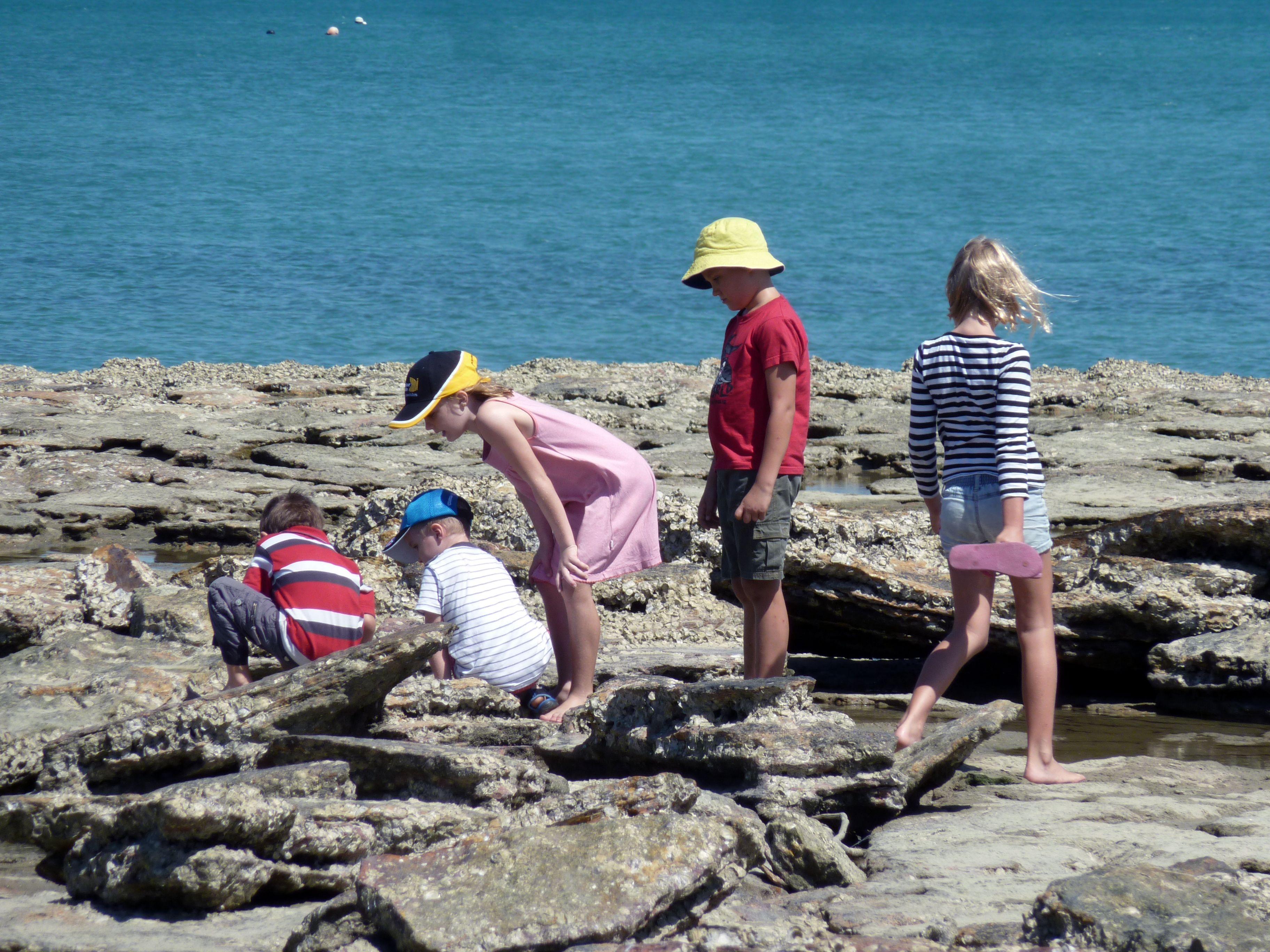
On current trajectories, future generations of children will have less rich nature experiences than today's children. Image: Jaana Dielenberg
Deep frustration with the budget has led more than 400 scientists, young people, Indigenous leaders, and conservation experts to write collectively to the Prime Minister and Treasurer, pleading for adequate funding to stop rapid nature loss.
They argue the budget was a big backward step on the only intergenerational issue actually recognised in Australian laws, the need for the current generation to maintain the health of the environment for the benefit of future generations. It also fails to honour pledges by the Labor government to end neglect of the environment and prevent new extinctions.
The group includes 58 young people and 106 professors, 200 people with PhDs, and has been backed by many of Australia’s peak professional scientific bodies, conservation organisation CEOs, and Landcare groups.
Budget analysis by the Biodiversity Council found only 0.06%, or $1 in every $1667 of Government spending, will go to on-ground land and ocean conservation, for activities like weed, pest animal and fire management, coast, reef and bushland restoration and threatened species conservation led by Indigenous Rangers, Landcare and regional groups.
This is a reduction from this year’s already low spend, and future years have even less allocated, with the commitment in 2028-29 almost half of this year’s spend in real terms after accounting for inflation.
The group are calling for 1% of the federal budget to be invested in long-term on-ground conservation programs. This is the amount scientists have estimated is needed to halt rapid nature loss, prevent extinctions and start recovering degraded areas.
Letter signatory 24-year-old Indie said, “As a young person working in conservation, I feel like this budget - that is meant to be making homes more accessible for young people - is sacrificing everyone’s real home: the planet.”
Emeritus Professor in Environmental Science Philip Gibbons at the Australian National University said, “Australia will not provide the same opportunities for future generations if we continue to neglect our environment.”
The group say inadequate investment in nature conservation activities will result in much bigger problems later, burdening future generations with huge economic, social and environmental problems, such as fewer pollinators and more algal blooms.
Professor Euan Ritchie from Deakin University and the Biodiversity Council said, “Extensive research shows that rates of nature loss are closely tied to levels of conservation investment. Despite being a wealthy nation, by world standards, Australia’s investment in nature conservation is very low, which is why we have one of the highest rates of nature loss.
“At the moment, the government is short-changing future generations, and will leave them with a degraded environment, uninsurable homes, and without many of the amazing nature experiences and benefits we have today,” said Professor Ritchie.
15-year-old conservationist Spencer Hitchen said, “Investing in nature is investing in the future of our country and all of us. The decision makers of today have an obligation and a duty to care for my future and the future of the planet we will inherit. Extinction is not an option for my generation.”
Many Landcare groups signed the letter. “A healthy country means a healthy future. Let's invest in our future and raise the funding commitment to 1% of the budget. A healthy future is priceless,” said Sharon Wright, General Manager, Noosa & District Landcare Group.
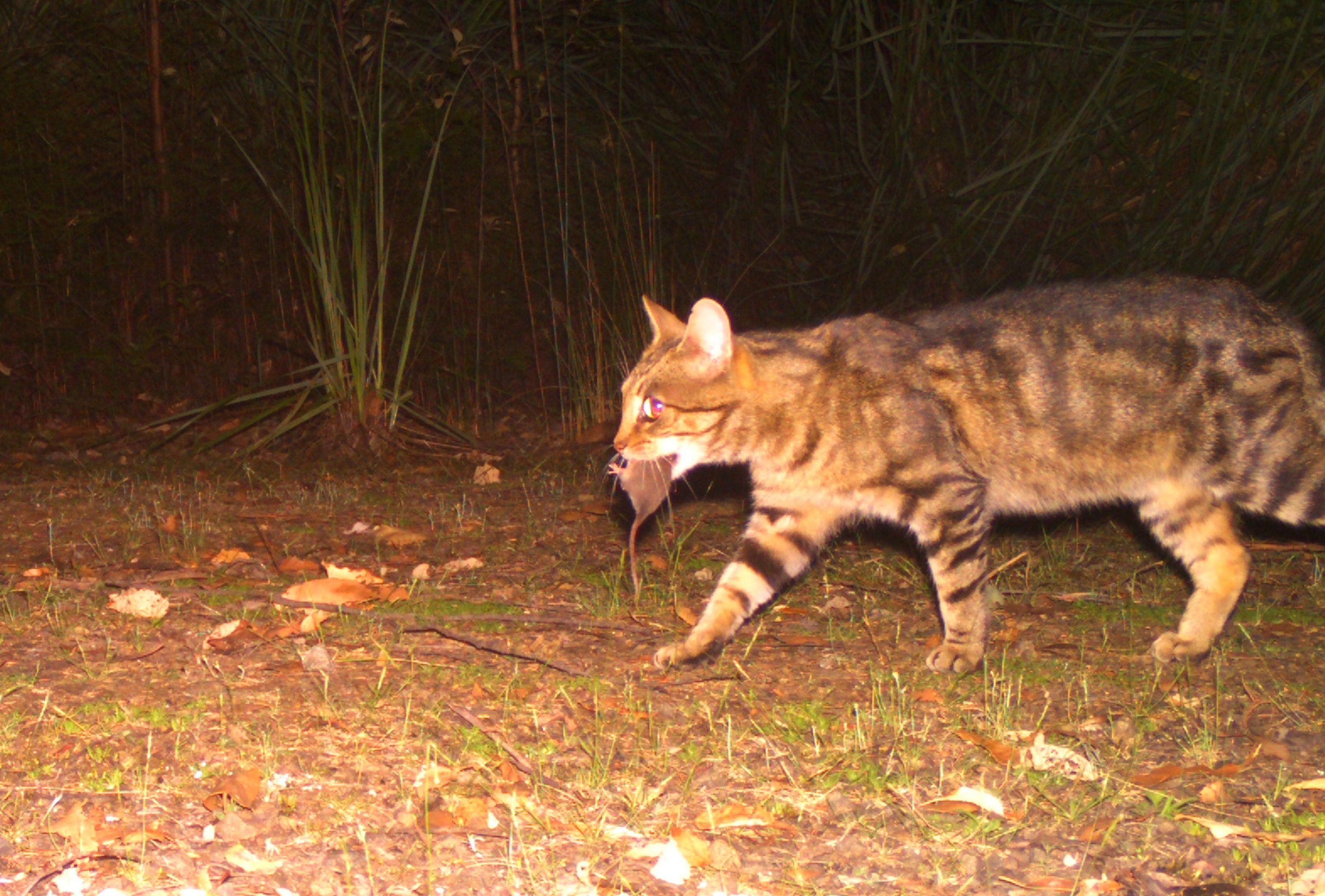
A feral cat that has caught a native pygmy possum. Without adequate funding for their management, feral cats, foxes and other invasive species will take an even bigger toll on already declining native wildlife. Photo: BW Brook and JC Buettel at the University of Tasmania
The letter was sent to the Prime Minister Albanese, Treasurer Jim Chalmers, Environment Minister Murray Watt and Finance Minister Katy Gallagher and can be read on the Biodiversity Council website.
The letter argues that short injections of funding into conservation programs, such as the modest two-year extension to the Saving Native Species Program, demonstrate a ignorance of the ongoing nature of Australia’s biggest conservation problems and the need for adequate long-term funding.
"The practice of looking after Country continues to be undermined by a lack of long‑term, structural investment in on‑ground operations,” said Barry Hunter, CEO, North Australian Indigenous Land and Sea Management Alliance (NAILSMA) and a Biodiversity Council member.
“As custodians of vast estates across northern Australia, Indigenous Ranger groups and Traditional Owners are constrained by short-term, erratic funding and rigid grant structures that do not respect that wildfire, feral animals and invasive species are long-term challenges. Effective stewardship requires stable, multi‑decade capital directly allocated to the people working on the ground," Hunter said.
Many of the 435 signatories wrote personal messages to the Prime Minister, Treasurer and Environment and Finance Ministers. Some are included here, but all can be read in the letter.
Professor Andrew Lowe, Director of the Environment Institute at Adelaide University, said, “We derive so much societal and economic value from nature, it's essential for us to invest in its long-term recovery and sustainability, which in return will support us.”
Tasman Sadler, a 23-year-old freshwater ecology research student, said, “Biodiversity is under greater threats each year, and if we don't prioritise the conservation, research and protection efforts, and properly fund projects that need to happen, we will have larger unfolding consequences across society and the environment.”
“Biodiversity is the pride of Australia, and I would hope to see the budget put towards it reflect that better,” said 19-year-old Yahan Yang.
Internationally recognised human-rights expert Professor Bridget Lewis at the Queensland University of Technology said, “Scientists and First Nations knowledge holders already know what’s needed, yet this budget shows they are not being heard or supported. Without decisive action now, future generations will rightly judge us for letting this critical opportunity slip through our fingers.”
Janneke Delhey Peters, a 20-year-old student at the University of Melbourne, said, “Once any part of the natural world is lost, it is lost forever. Roads can be repaved, power stations rebuilt, but once destroyed, natural ecosystems, which are more complex than any man-made structure, are destroyed forever.”
“As a 20 year old, I expect climate change to have a large impact on my life, and to witness large biodiversity loss over my lifetime. The fact that this extremely pressing issue for young people is not addressed in the budget is highly disappointing, particularly in a budget that has made other welcome steps to address generational inequality,” Lucas Tomkins, Millennium Kids Youth Board Member, university student, Age 20.
”From a native title perspective, where our responsibilities to Country are ongoing and recognised under native title, the reduction in government investment in nature care is deeply disappointing and undermines our ability to fulfil those obligations. It weakens First Nations land and sea management, risks cultural knowledge, and shifts this burden forward. Sustained, long-term investment is essential to properly care for Country and support our ongoing obligations across generations,” CEO Simon Hawkins, Representing Yamatji Marlpa Aboriginal Corporation.
“Every year I feel more and more disappointed with our government. It is extremely frustrating when young people seem to care more for our environment than those who call themselves our leaders. Please step up," Alexandra Christo, 19 years old.
“Australia’s natural wonders are not only environmentally priceless but vital to our tourism economy. Millions travel here every year to experience our wildlife and landscapes, supporting regional communities and jobs. Yet these ecosystems are under growing threat. Protecting nature is not an expense, it is an investment in Australia’s future, economy, identity, and the generations who will inherit it,” Jessica Lane, Miss Earth 2024 and oceans advocate, 23 years old.
“As a scientist studying the impacts of environmental change, it saddens me to see the ongoing loss of diversity and the lack of investment in halting and reversing this decline. More tragic still is knowing that my children and future generations of scientists will be left with diminished, less resilient ecosystems and will carry the economic and social costs of this,” Associate Professor in Ecology Ben Moore at the Hawkesbury Institute for the Environment, Western Sydney University.
“There are so many reasons that we should be investing in nature - economic, cultural, social. It is deeply disappointing to see so little foresight in this budget, with more emphasis on fast-tracking environmental approvals than on conserving and restoring the natural systems that sustain us all,” Associate Professor Anita Foerster, an Environmental Law expert at Monash University.
“Australia spends billions each year subsidising activities that harm nature, while underfunding the conservation work needed to meet our Global Biodiversity Framework commitments by an order of magnitude. This budget does nothing to close that gap — and every year of delay makes the eventual cost larger and the ecological losses harder to reverse,” Paul Elton, Doctoral Researcher, The Australian National University.
“As a young person, it is both frustrating and concerning to see globally significant ecosystems like the Great Southern Reef continue to face growing pressures, with impacts already being felt across our communities, environment, and tourism industry. Nature is fundamental to our lives and underpins much of what makes Australia unique, yet it is not receiving the protection it deserves. Future generations will inherit the consequences of the decisions being made today,” Olivija Spanovskis, Miss World Australia 2026.
“Other parts of this budget show the government's interest in long-term investment for substantial societal change, yet when it comes to our environment, it has ignored this. Extremely disappointing, ignorant, and dangerous,” Ryan Borrett, PhD student, Murdoch University.
“One of the most confronting realities of Australia's biodiversity decline is that my daughters, aged just 10 and 14, have already seen noticeable changes at their local snorkelling spots within only five years of exploring the Great Southern Reef.” Deakin University Associate Professor of Marine Science, Prue Francis.
“It is baffling that we need to make the case to protect the very thing that keeps humanity alive. So, the question for the Prime Minister is this: when faced with overwhelming scientific evidence that the destruction of nature is driving mass suffering and risking extinction for much of life on Earth, do we perceive this as an existential crisis, and will our response match the gravity of the crisis?” Natalie Kyriacou OAM, Environmentalist & author
“A healthy environment is essential to the future of all Australians. It must become a national priority,” Chrissie Goldrick, Executive Chair of the Australian Geographic Society.
“True intergenerational equity means addressing the twin crises of climate change AND biodiversity loss so that our descendants have what we have taken for granted,” Ange Pestell, Fire ecologist.
“The steady decline in the proportion of the budget dedicated to conservation is extremely short sighted. We know the condition of our environment is in decline, by the government's own reports. In 2022 Australia signed on to maintain and/or restore 30% of our landscape to ecosystem protection. This requires an immense, long-overdue and long-term effort. A declining budget is no way to begin,” Peter Martin, Ecologist, Kangaroo Island Conservation Landowners Association
“Governments do not seem to value the natural world when they and we are an integral part of it and without it we do not exist,” Bernard Stonor, Wildlife ecologist and photographer, Kangaroo Island Research Station.
“As a conservation practitioner, I have observed numerous critical projects deteriorate due to insufficient government funding, resulting in the irreversible loss of many unique and irreplaceable ecosystems. It is imperative that we increase funding for this vital aspect of intergenerational wealth to ensure that future generations have access to a better environment,” Ha Hoang, Conservationist and ecologist.
“As the chair of a conservation organisation it is so disappointing to see how little attention or funding is given to support biodiversity - our life support system on which we all depend. Please consider what we stand to lose on our planet if we don't give attention to nature,” Ann Ward, Chair, Nature Conservation Margaret River Region.
“This budget is not intergenerational. Intergenerational equity begins with a legacy of planetary health and stewardship, not one of nature destruction and paucity of funding environmental care. The future of our species is inextricably linked to nature's systems; the environmental crises facing us require 1% of the budget. This isn't too much to gift to children and young people,” Dr Andrea de Kauwe, Conservation Ecology Centre and Southern Otway Landcare Network.
“Working in the natural resources management sector for over 15 years I have seen increasingly urgent pressures met with diminished funding, years of work and investment lost to lack of ongoing funding and a sector that brings so much value to our environment, our native species, our communities, our primary production industry and our overall landscape resilience being expected to do more with less, year after year.” – Nathalie Laurence,” Nathalie Laurence, conservation practitioner.
“As a former conservation practitioner, bushcare worker and habitat volunteer, I believe the environment deserves far greater investment in this budget. We are facing one of the most critical moments in history for our environment, precious habitats, wildlife and ecosystems. Nature is not separate from us — we are part of it, and its protection should be among our highest priorities. Without healthy ecosystems, we cannot have healthy communities, economies or futures,” Luisa Low, conservation practitioner.
“The wonders of Australia's extraordinary biodiversity should be the most important component of our legacy to our children, grandchildren and their descendants. Our natural heritage deserves so much more than will be achievable with the diminished funding provided by this budget,” Professor Emeritus Helene Marsh, James Cook University.
“Very disappointed with the government's lack of commitment to the preservation of Australian biodiversity,” Dr Aimee Silla, Conservation Biologist, University of Wollongong.
“Labor is attempting to be only the least worse on conservation of the major parties. A very low bar. They need to get serious about nature conservation before they are justifiably deserted by sensible young voters,” Dr Geoffrey Wescott, Marine and coastal expert, Deakin University.
“I grew up watching nature decline, and now I work to help turn that around. I've seen what years of underinvestment actually costs for people's jobs and quality of life, not just wildlife. Our environment supports so much of what we eat, where we holiday, and how we live. When government treats this as an afterthought, as they consistently do, it adds to the debt future generations have to pay,” Dr Dr Christopher Johnson, Senior Ecologist.
“As a scientist who has worked in conservation science for 40 years and a grandparent, I am deeply disappointed by the low priority given to conservation in the federal budget. Such ongoing neglect of nature in this unique continent, a key component of our common wealth, amounts to intergenerational theft. I grieve over the loss of wonders my grandchildren will never get to enjoy because of our inaction,” Professor Emeritus Michael Clarke, La Trobe University.
“Australia is recognised as a land inhabited by unique plants and animals. In addition to all other reasons, protecting biological diversity is an important part of protecting our natural heritage, our national identity and our reputation,” Dr Edward Tsyrlin, Conservation and stream management practitioner, The University of Melbourne
“By failing to adequately invest in environmental conservation, this budget risks shifting today’s ecological costs onto future generations, deepening intergenerational inequity and leaving a diminished natural legacy that cannot easily be restored.” – Eleanor Hetharia, Environmental policy advisor.
“As an ecologist and father, I am deeply disappointed by the lack of foresight evident in this federal budget. The lack of funding committed to conservation and research clearly increases ongoing risks to biodiversity and the natural heritage of this country. By continuing to degrade ecosystems we are accruing a debt that will be left to our children to pay,” Dr William Mitchell, La Trobe University.
“As an ecologist who studies and values nature, I am devastated at the lack of investment in biodiversity conservation in this country. Australia should be embarrassed by how much we spend on nature. We can do better, and we have to do better, to secure our children's future,” Dr Jacinta Humphrey, The University of Melbourne.
“The future is now when it comes to investing in our environment. We won't get a second chance to conserve our unique flora and fauna,” Dr Catherine Price, Senior Lecturer in Ecology and Conservation, University of Sydney .
“Australia's unique wildlife and the places they call home deserve our respect and care. This budget does little to support conservation in a time of rapid environmental change. What legacy will we leave future generations if they can no longer see koalas, or frogs, or ancient forests?” Professor of Ecology Kirsten Parris, The University of Melbourne.
“I am one of many other conservation ecology experts who cannot be more clear; we are at breaking point. Biodiversity has never needed more help than it does now. We are exhausted from continually asking, but we will not give up until it happens. The wild is vanishing and we need to join the rest of the international community who prioritise funding for nature conservation; Australia is far, far behind,” Dr Emily Scicluna, Conservation Biologist, University of Melbourne.
“As a native bee scientist working at the frontline of native invertebrate conservation, it is abysmal that such a tiny fraction of the budget is going into our environment (with nil into native pollinators). No new extinctions? Not achievable with this budget (except for ensuring we have no idea that species are going extinct because there is no funding to monitor them),” Dr Kit Prendergast, Native bee ecologist and conservation scientist, University of Southern QLD
“The priorities of multinational corporations and billionaires continue to be put above the wellbeing of the planet and majority of people living on it. Climate and biodiversity should be at the centre of the budget conversation if there is any hope of intergenerational equity,” Lily Collins, Project Manager in One Health research.
“Deeply disappointed by this government’s neglect of environmental issues,” Professor Leigh W Simmons, Evolutionary biologist and ecologist, The University of Western Australia.
“As a practitioner working at the front line of ecosystem restoration and natural capital assessment, I see daily that Australia’s biodiversity decline is not an abstract future risk, it is already affecting communities, industries and landscapes. Cutting real investment in nature now is economically short-sighted and unfair to future generations. If we are serious about repair, biodiversity funding must match the scale of the problem,” Dr Matthew Cameron, Director & Principal Ecologist Blue Conservation Services.
“As a conservation scientist, it is heartbreaking to witness the accelerating loss of biodiversity, but even more disheartening is the continued failure to adequately fund the protection of Australia’s unique species and ecosystems before it is too late,” Dr Daniel Gomez Isaza.
“Australia has the unenviable global record of species extinctions (>100), plus over 2100 species currently threatened with extinction. It's illogical for the government to fail so spectacularly on nature spending when over half of our economy depends on healthy ecosystems, and when 97% of Australians want more action to support biodiversity,” Dr Christina Zdenek, BirdLife Australia.
“As a Conservation Biologist at the forefront of saving endangered species, I have seen the ongoing and increasing collapse of Australia's amazing biodiversity first-hand. Our unique environment and spectacular flora and fauna underpin everything, including community health, wellbeing and economy. Significantly greater investment is immediately required to protect and recover our biodiversity for a better future for all. Once it is lost, it is gone forever - a completely avoidable tragedy,” Dr Marissa Parrott, Conservation Biologist and Vice President, Australian Mammal Society.
“As someone who works closely with researchers, educators and coastal communities, I’m concerned by the continued lack of long-term investment in temperate reef ecosystems. We cannot properly respond to challenges like marine heatwaves, harmful algal blooms and biodiversity decline without sustained monitoring and coordinated management,” Stefan Andrews, Marine scientist, filmmaker and co-founder of the Great Southern Reef Foundation.
“Our rivers and waterways are our lifeline - species are declining and we need urgent action to prevent further extinctions and enable future sustainable fauna and flora populations,” Dr Sylvia Zukowski, Senior aquatic ecologist, Nature Glenelg Trust.
“It is heartbreaking to see more and more highly trained expert scientists and practitioners out of job when our work is so much needed!” Dr Alexandra Pavlova, Molecular Ecologist and Director of Wildlife Genetic Management Hub, Monash University.
“The hallmark of life is diversity. The government’s lack of political will to support the environment and our biodiversity is shameful. The government is in the position to actually do something about biodiversity loss but it seems that they have dropped the ball. It’s frustrating for a biologist to see the lack of political will to act and instead see further erosion of our biodiversity assets, a death by a thousand cuts,” Associate Professor Simone Blomberg, Teacher and researcher in evolutionary biology and biosystematics, University of Queensland.