Back from extinction, now on the brink. The fight to save Victoria’s most imperilled reptile
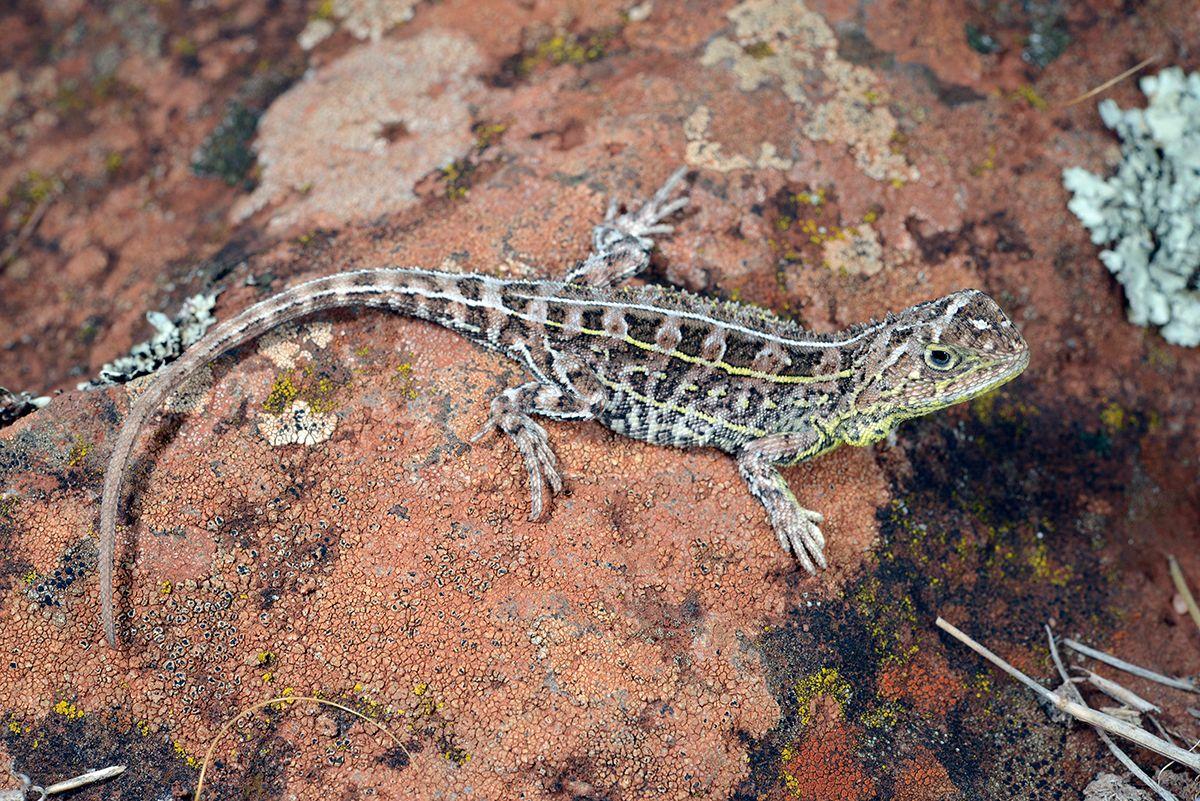
The Victorian grassland earless dragon. Image: Peter Robertson
News story
27 February 2026
On the grassy plains west of Melbourne, a tiny earless dragon survives in just one wild location. That remaining habitat - a small patch of private grazing land - is in a rapidly developing area on Melbourne's western fringe, leading to calls for the government to secure and manage the site as a conservation reserve.
Until a few years ago, the Victorian grassland earless dragon (Tympanocryptis pinguicolla) had not been seen for almost 60 years, raising fears that it was potentially extinct. In January 2023, a single wild population was rediscovered during a pre-development survey.
Although some of the animals were taken to establish a captive breeding population at Melbourne Zoo, the single confirmed wild location remains incredibly important to the species' long-term survival and can teach us a lot about the conditions that the species needs to persist.
Peter Robertson, a reptile ecologist and member of the Victorian Grassland Earless Dragon Recovery Team, introduces us to this small but remarkable reptile and what's needed to secure its last known wild population.
Meet the dragon
“This little dragon is perhaps the last remnant of a population that was distributed over the volcanic plains between Melbourne and Geelong,” said Peter Robertson.
“It's a very small lizard. Only about the size of your palm and quite well camouflaged, so it fits in very well in the grassland environment.
“They're quite social. So, when they're in the field, they wave at each other with their front limbs. We don't really know what a lot of those hand signals mean, but there's certainly communication between the dragons at a distance using that hand waving. It's quite cute to see them doing that.
“It's only known from this one small population on private land west of Melbourne. Much of the surrounding, what was formerly habitat, is now being developed for residential development, or has been 'banked' by developers - halting agricultural practices and allowing it to degrade.
“We believe very little of the right sort of habitat is left for the dragons. There's every likelihood that the species won't be found anywhere else. So it's imperative that the one site where it now occurs can be conserved.
“If the Australian and Victorian governments don't get together to secure and manage this site for the conservation of the dragon, there's every likelihood that it will go extinct in the near future.
“Surveys should continue across the region prior to any development to make sure that we're not destroying additional sites where the species might have occurred.”
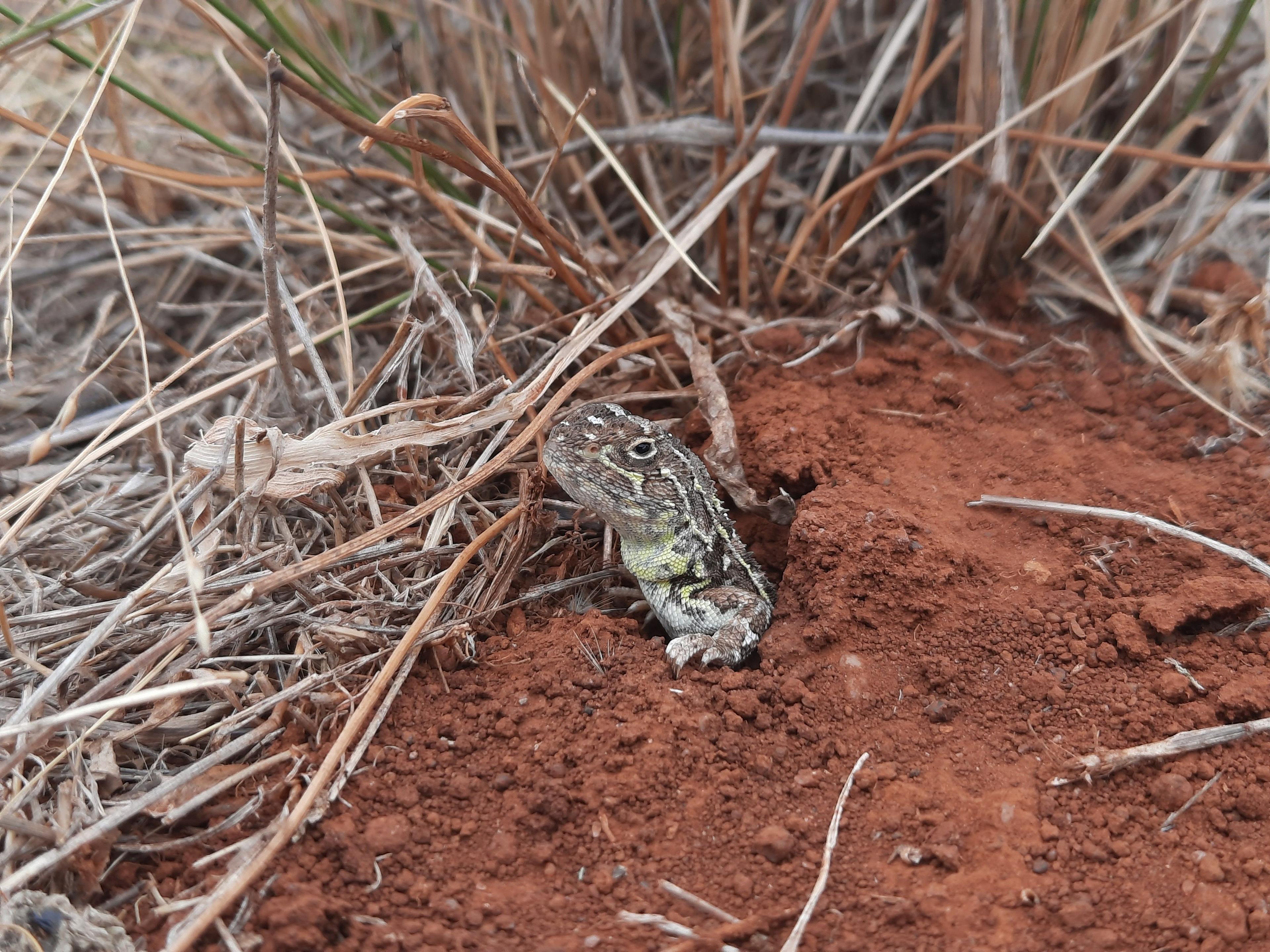
A Victorian grassland earless dragon emerging from a burrow. Image: Nick Rutter
Call for government action - and sheep!
The Biodiversity Council support the delivery of new housing, and say it is possible to deliver new homes without causing extinctions, if governments act strategically and adequately fund essential conservation actions.
They are calling on the Victorian and Australian Governments to step up to urgently secure the dragon site and fund appropriate ongoing management, which will need to include adaptive long-term grazing by sheep.
While bulldozers can destroy a site in hours, the promise of development has also led to the long-term degradation of many of the remnant grassland areas in the region, by stopping agricultural land management practices, potentially wiping out other dragon populations.
It can occur when developers purchase and 'bank' agricultural land, speculating on its potential future development, stopping practices like grazing and leaving sites to become overgrown and infested with weeds.
In the absence of native grazing animals and Aboriginal grassland management practices like regular burning, sheep grazing, can help support suitable grassland habitat conditions for species like the dragon. They do this by reducing the grass 'biomass', or volume. Without it the grassland can become too overgrown for species like the dragons that need to be able to bask in the sun, and the extra biomass leads to much hotter and more dangerous fires.