Youth-led conservation groups are bringing young Australians back into nature
Image source: Jaana Dielenberg
Many young Australians care deeply about the climate and environment. In fact, our survey found that young people are the group most likely to be influenced by environmental issues when voting. Yet when it comes to on-ground conservation, participation among young people lags behind older age groups.
Australia needs more young people involved in caring for the environment - after all, they will bear the impacts of nature losses and climate challenges in the future - but issues like eco-anxiety and growing disconnection from nature are holding many back from taking action.
A growing movement of youth-led conservation initiatives is working to close this gap, building communities of young people who are driving practical solutions for nature while also supporting mental health and social wellbeing.
Two young leaders in this space - Mackenna Minstrell, Future Leader at Climate 200, and Monique Jeffs, Community Organiser at the Cairns and Far North Environment Centre (CAFNEC) - joined Biodiversity Council Science Communications Director Jaana Dielenberg to discuss the issue on ABC Radio Far North with Adam Stephen.
“We aren't seeing as many young people participating in conservation actions as we are older people at the moment,” said Jaana.
“But there is this really interesting movement of young people-led conservation initiatives that are encouraging more young people in.
“And a lot of young people are being attracted because it helps them with their mental health and wellbeing by being out in nature, it addresses their climate anxiety, and they’re making connections with other young people and the community.”
“The more that young people can be engaged in the issues that really scare them, and lead to legitimate eco-anxiety, the easier it is to grapple with those concerns,” said Climate 200 Future Leader Mackenna Minstrell.
"While the global trajectory can be genuinely scary, I find one of the best ways to face these concerns is to find active hope by making a difference on the ground in your community.”
One of these youth-led initiatives is Co-Exist, which creates spaces designed by young people for young people, so they can feel a sense of belonging and leadership in a movement often skewed towards older people.
“If you're just a single young person turning up to an established landcare group, you might not feel comfortable when everyone's 30 years older than you. And so there have been some youth-led initiatives like Co-Exist, where it's young people coming together and combining active nature care projects like beach clean-ups and tree plantings with fun social activities,” said Jaana.
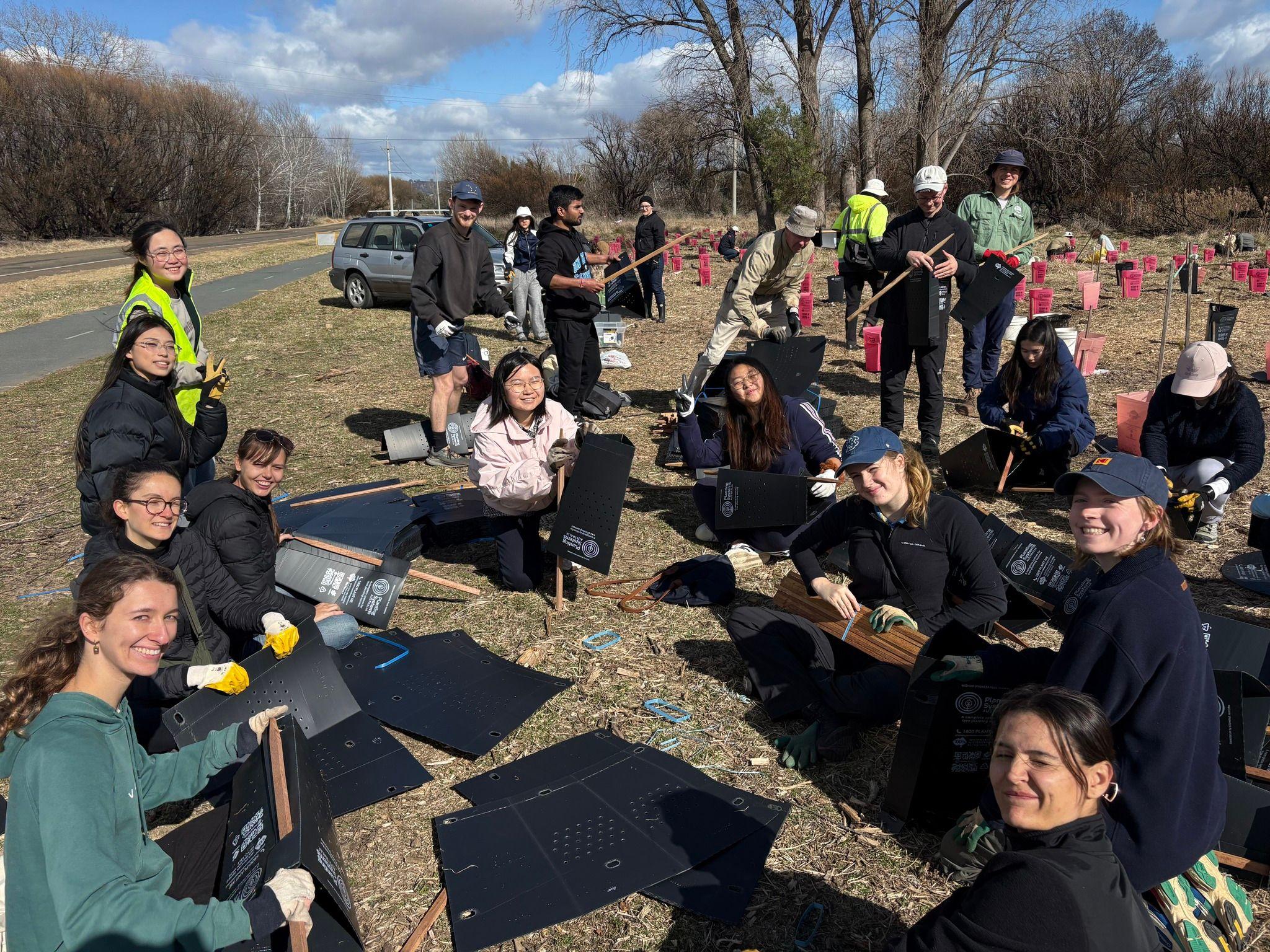
Members of ANU Intrepid Landcare - part of the established national Intrepid Landcare network of young leaders - helping Friends of Jerrabomberra Wetlands with local revegetation work. Image: Christopher Johnson / Intrepid Landcare
Other groups, like Intrepid Landcare, take a slightly different approach - acting as a bridge between young people and the wider Landcare network, drawing on their 10 years of youth-led projects and local groups across Australia. By helping young people and local groups co-design youth-friendly projects and events, it makes it easier for new volunteers to feel welcome, build confidence, and stick around, while supporting intergenerational learning, professional development, and longer-term leadership.
“There is so much wisdom and perspective in the conservation movement and it's so valuable as a young person to be able to work and volunteer alongside people who’ve been advocating for the environment and community for a long time,” said CAFNEC Community Organiser Monique Jeffs.
“As well as CAFNEC, there are other amazing organisations up here in Far North Queensland, like Kuranda Conservation, Holloways Beach Coastcare and Treeforce, that have a broad age range of volunteers and there is a real magic when you have the mix of perspectives and intergenerational collaboration and everyone is learning from each other."
“And it’s not just about boots on the ground - leadership is really essential to elevating youth voices,” said Mackenna.
"Young people are very intelligent, care deeply about our environment and have the capacity to give back to our communities. It is important to tap into the knowledge of young environmentalists for their perspective on how best to engage in the community in a way that welcomes more young people to be active and feel accepted into these amazing conservation spaces.
“It really empowers a young person to take the destiny of the world that they live in into their own hands, and therefore impact the outcomes for our shared future.”